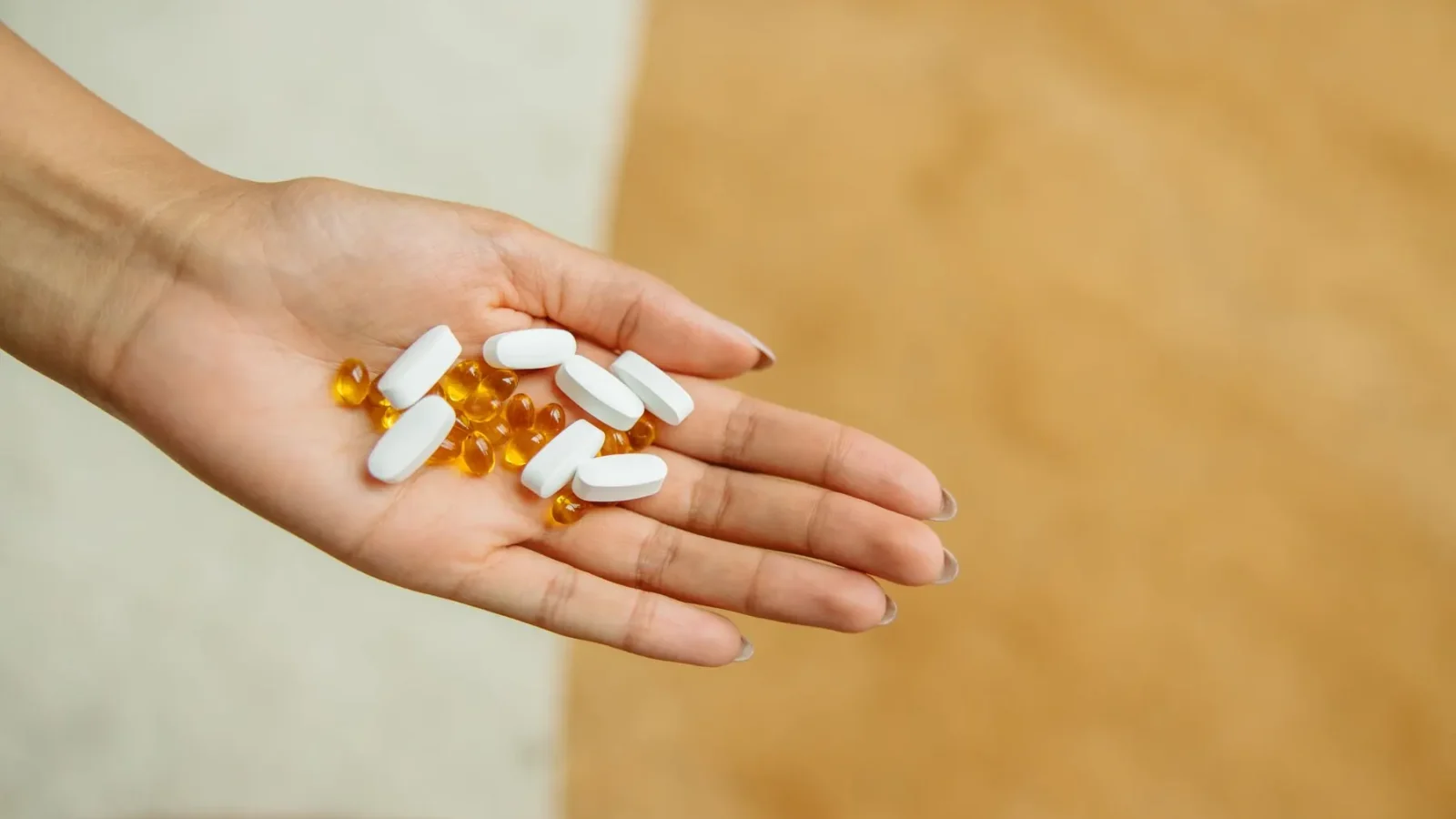
Most women don’t need a cabinet full of supplements. The ones most likely to make a real difference are those that fill a genuine gap: iron if your stores are low, vitamin D if your blood level is low, folic acid if you could become pregnant, and sometimes magnesium if your diet falls short.
The herbal “hormone-balancing” options, such as ashwagandha, rhodiola and maca, have much thinner evidence and come with real cautions. This guide grades each option honestly, explains when to test before you buy, and flags who should check with a clinician first.
One rule runs through everything below: test, don’t guess. Iron and vitamin D in particular can cause harm when you take more than you need.
The evidence at a glance
Here’s how the supplements women most often ask about compare. The evidence rating refers to the specific use listed, not to the nutrient in general.
| Supplement | Most useful for | Evidence | Test or check first? |
|---|---|---|---|
| Iron | Correcting low iron stores or iron-deficiency anemia | Strong, if you’re actually low | Yes: ferritin and hemoglobin |
| Vitamin D | Correcting a low vitamin D level | Strong, if you’re actually low | Often worth it: 25(OH)D blood test |
| Folic acid | Lowering the risk of certain birth defects | Strong | No test needed if you could become pregnant |
| Magnesium | Filling a dietary shortfall | Moderate for filling gaps; limited for PMS, sleep or mood claims | Check kidney health and medications |
| Omega-3 (EPA and DHA) | Topping up if you rarely eat fatty fish | Weak for hormone and PMS claims | Check medications |
| Ashwagandha | Stress and sleep | Limited | Yes: thyroid, liver, pregnancy and medications |
| Rhodiola | Fatigue and stress | Insufficient | Check medications |
| Maca | Menopausal symptoms | Very limited | Safety not well established |
| Inositol | PCOS (some metabolic markers) | Limited and inconclusive | Discuss with your PCOS care team |
Iron: test first, then supplement
Iron helps your blood carry oxygen, and periods mean many women lose some every month. Heavy menstrual bleeding, pregnancy, a vegetarian or vegan diet and frequent blood donation all raise the risk of running low.
According to the NIH Office of Dietary Supplements (ODS), women aged 19 to 50 need 18 mg of iron a day, rising to 27 mg in pregnancy. After 51, the need drops to 8 mg. Vegetarians may need about 1.8 times more, because iron from plants is absorbed less well.
More is not better, though. The upper limit for adults is 45 mg a day unless a clinician prescribes more, and some people have an inherited condition, hemochromatosis, that makes iron build up. Tiredness has many causes, so a blood test that includes ferritin (your iron stores) and hemoglobin is the sensible first step.
If your clinician recommends iron
- Follow the dose and schedule you’re given. Treatment doses are higher than everyday amounts and are meant to be monitored.
- Vitamin C helps you absorb iron from plant foods and supplements. Ask your pharmacist how far apart to take iron and calcium supplements or antacids.
- Nausea and constipation are common at higher doses. Ask about changing the form or timing rather than quitting.
- Iron can reduce how well levothyroxine (thyroid medication) is absorbed, so keep them apart as advised.
- Store iron out of children’s reach. Accidental overdose in young children is dangerous.
Vitamin D: helpful when you’re low, harmful in excess
Vitamin D helps your body absorb calcium and keep bones strong. Your skin makes it from sunlight, but many people fall short, especially those who spend little time outdoors, have darker skin, are older, have obesity or have conditions that affect fat absorption.
The recommended intake for adults up to age 70 is 600 IU (15 mcg) a day, including during pregnancy and breastfeeding, and 800 IU (20 mcg) after 70. The upper limit for adults is 4,000 IU (100 mcg) a day.
A 25-hydroxyvitamin D blood test shows where you stand. NIH ODS describes levels below 12 ng/mL as deficient and 20 ng/mL or higher as adequate for most people, and links levels above 50 ng/mL to potential adverse effects. So the popular advice to aim for 50–80 ng/mL doesn’t fit the official guidance.
Too much vitamin D raises blood calcium, which can cause nausea, vomiting, muscle weakness and kidney stones. Steroids, the weight-loss drug orlistat, statins and thiazide diuretics can all interact with vitamin D, so tell your prescriber what you take.
Many products pair D3 with vitamin K2. That pairing isn’t needed to correct low vitamin D, and if you take warfarin, talk to your prescriber before using anything that contains vitamin K.
Magnesium: worth considering if your diet falls short
Magnesium supports muscle and nerve function and energy metabolism. US dietary surveys show many people eat less than recommended. Women need 310–320 mg a day, and 350–360 mg in pregnancy.
Food comes first: nuts, seeds, beans, whole grains and leafy greens are good sources. If you supplement, keep magnesium from supplements to 350 mg a day or less unless your clinician advises otherwise. Above that, diarrhea, nausea and cramping become more likely.
Form affects comfort. NIH ODS notes that magnesium citrate, lactate, chloride and aspartate are absorbed more completely than magnesium oxide. Glycinate is another popular form. Whichever you choose, check the label for elemental magnesium per serving.
People with kidney disease shouldn’t take magnesium supplements without medical advice, because the kidneys clear the excess. Magnesium can also interact with bisphosphonates, some antibiotics, diuretics and proton pump inhibitors. Claims that it fixes PMS, sleep or anxiety go beyond what the evidence shows.
Omega-3s and B vitamins
Omega-3 fatty acids
EPA and DHA come mainly from fatty fish such as salmon, sardines and mackerel. If you rarely eat fish, a fish-oil or algae-oil supplement is a practical way to get them, and algae oil suits vegetarians and vegans.
Be wary of bigger promises. We couldn’t find strong, consistent evidence that omega-3 supplements balance hormones, fix PMS or work “as well as ibuprofen” for period pain, so don’t buy them for those reasons. On the label, look for the combined EPA plus DHA amount, not the total “fish oil” figure.
Folic acid, B12 and B-complex
Folic acid is the B vitamin with the clearest case for women. The CDC recommends that anyone who could become pregnant get 400 mcg of folic acid every day to help prevent serious birth defects of the brain and spine. It matters before pregnancy, ideally starting at least a month before conception.
Vitamin B12 is worth raising with your clinician if you eat a vegan diet, because it comes naturally almost only from animal foods. A B-complex won’t boost energy unless you’re actually low in something, so skip the “energy” marketing and the mega-dose products. If you’ve been told you have an MTHFR gene variant, ask your clinician what’s right for you rather than following online advice.
Ashwagandha, rhodiola and maca: limited evidence, real cautions
These herbs are often marketed as “adaptogens” that rebalance stress hormones. The research is much thinner than the marketing.
Ashwagandha
The US National Center for Complementary and Integrative Health (NCCIH) says some ashwagandha preparations may help with stress and insomnia, but its effect on anxiety is unclear. Products vary in extract type and amount, so a result from one study doesn’t automatically apply to the bottle you buy.
NCCIH says it may be safe short term (up to 3 months), but long-term safety is unknown. It can cause drowsiness, stomach upset and diarrhea. It also has important safety limits:
- Pregnancy and breastfeeding: NCCIH says to avoid it during pregnancy and not to use it while breastfeeding.
- Liver: liver injury is rare but has been reported. Stop and see a doctor if you notice yellowing skin or eyes, dark urine or persistent itching.
- Thyroid and autoimmune conditions: it isn’t recommended if you have a thyroid or autoimmune disorder, or before surgery.
- Medications: it may interact with thyroid hormone, diabetes and blood pressure medicines, immunosuppressants, sedatives and anti-seizure drugs.
Rhodiola
NCCIH says there isn’t enough reliable evidence to know whether rhodiola helps, and that human studies are of low-to-moderate quality. It appears possibly safe for up to 12 weeks, with dizziness, headache and insomnia among the reported side effects. Little is known about its safety in pregnancy or breastfeeding, and an interaction with the blood pressure drug losartan has been reported.
Maca
Maca is an Andean root sold as a powder or capsule. A 2011 systematic review of maca for menopausal symptoms found only four small randomized trials. They pointed in a favorable direction, but the reviewers said the trials were too limited in number, size and quality for firm conclusions, and that maca’s safety hadn’t been established.
Claims that black maca boosts energy or red maca protects bones aren’t supported by the evidence we reviewed. Skip maca during pregnancy and breastfeeding, and ask your doctor first if you have a hormone-sensitive condition.
Inositol for PCOS
Inositol, mainly myo-inositol and D-chiro-inositol, is often suggested for polycystic ovary syndrome because it may improve how the body responds to insulin.
A 2024 systematic review, carried out to inform the international PCOS guideline, included 30 trials with 2,230 participants. It found possible benefits for some metabolic measures, and possibly for ovulation with D-chiro-inositol, but no clear effect on many other outcomes. The authors called the overall evidence limited and inconclusive.
Myo-inositol caused fewer stomach side effects than metformin, though metformin may do better for waist-to-hip ratio and excess hair growth. If you have PCOS, inositol is reasonable to discuss with your care team, alongside the treatment they recommend rather than instead of it.
Pregnancy, breastfeeding, thyroid and medication cautions
| If you… | What to know |
|---|---|
| Could become pregnant or are trying | Take 400 mcg folic acid daily. Avoid ashwagandha. Rhodiola and maca lack safety data. |
| Are pregnant or breastfeeding | Use the prenatal plan your clinician gives you for iron and vitamin D. Don’t use ashwagandha. |
| Have a thyroid condition or take levothyroxine | Ashwagandha isn’t recommended. Space iron away from thyroid medication. |
| Have kidney disease | Don’t take magnesium supplements unless your doctor recommends them. |
| Have liver disease | Avoid ashwagandha, which has rare reports of liver injury. |
| Take blood pressure, diabetes or blood-thinning medication | Ask your pharmacist before adding any herb or supplement. |
| Are under 18 | Check with a pediatrician before taking any supplement. |
What this looks like in practice
Here’s how this might play out for a hypothetical reader: a 32-year-old who feels tired most afternoons, has heavy periods, works indoors and hopes to get pregnant next year.
- She books a checkup and asks about ferritin, hemoglobin and vitamin D tests, mentioning her heavy periods.
- Her results show low ferritin but an adequate vitamin D level. Her clinician recommends an iron supplement at a set dose, and she doesn’t need extra vitamin D.
- She starts 400 mcg of folic acid daily, since she could become pregnant.
- She takes iron as directed, with a vitamin C-rich food, and asks her pharmacist how to space it from any calcium supplement or antacid.
- She decides against ashwagandha because she’s planning a pregnancy, and focuses on sleep and walking instead.
- She rechecks her iron when her clinician advises.
The result is two targeted supplements instead of nine, each with a clear reason behind it.
How to choose a product you can trust
- Look for independent testing. Seals such as USP Verified, NSF Certified or Informed Choice show a product has been checked against its label.
- Read the amount per serving. Look for elemental iron and elemental magnesium, vitamin D in IU or mcg, and EPA plus DHA for omega-3s.
- Avoid proprietary blends for herbs, because they hide how much of each ingredient you’re getting.
- Start one at a time and note how you feel over several weeks, so you know what’s helping.
- Tell your clinician and pharmacist about everything you take, including herbs.
Supplements work best on top of the basics: regular meals with enough protein, plenty of plants, movement you enjoy and decent sleep. If weight management is part of your goal, see our guides to how much protein to eat to lose weight, walking for weight loss and which diet supplement combinations are worth considering.