You don’t need a gym to get fit. Dancing, hiking, bike rides, pick-up games, playing with your kids, walking or cycling for errands, gardening and short home workouts all count toward the CDC’s goal of 150 minutes of moderate activity a week.
The best choice is the one you enjoy enough to repeat. Research suggests that how good an activity feels while you’re doing it helps predict whether you’ll keep doing it, which matters more than squeezing out a few extra calories per session.
Below you’ll find the evidence on enjoyment, a calorie table for popular no-gym activities, ideas for each type and a sample week that adds up to more than the weekly target.
Why enjoyment matters more than the “perfect” workout
Most fitness plans fail for a simple reason: people stop. The workout that burns the most calories on paper is useless if you dread it and quit by week three.
The practical takeaway is to choose activities that feel good at the pace you’ll actually do them. If running feels miserable but a dance class or a Saturday hike feels like fun, the second option is the better plan for you.
Enjoyment also helps with the bigger picture. For weight loss, the CDC notes that most weight loss comes from decreasing calories, and losing weight and keeping it off takes a high amount of activity unless you also adjust your diet. Fun activity supports your health and your calorie deficit; it isn’t a replacement for it.
How many calories fun activities burn
The table uses MET values from the 2024 Adult Compendium of Physical Activities, a research catalog of the energy cost of 1,114 activities in adults aged 19 to 59. One MET is roughly what you burn sitting quietly.
Calories per minute are calculated as MET × 3.5 × body weight in kg ÷ 200, here for a 70-kg (154-lb) adult. The figures are estimates that include the calories you’d burn at rest, and they don’t adjust for sex, fitness or body composition.
The intensity column uses the CDC’s cut-offs: 3 to 5.9 METs counts as moderate and 6 or more as vigorous.
| Activity (Compendium description) | METs | Intensity | Calories per minute (70 kg) | Calories in 30 min (70 kg) |
|---|---|---|---|---|
| Walking for pleasure | 3.5 | Moderate | 4.3 | About 130 |
| Walking to work or class | 4.0 | Moderate | 4.9 | About 145 |
| Hiking at a normal pace through fields and hillsides | 5.3 | Moderate | 6.5 | About 195 |
| Bicycling, leisure, under 10 mph | 4.0 | Moderate | 4.9 | About 145 |
| Bicycling for transportation, moderate effort | 6.8 | Vigorous | 8.3 | About 250 |
| Salsa dancing with a partner | 4.8 | Moderate | 5.9 | About 175 |
| Zumba, home video | 5.5 | Moderate | 6.7 | About 200 |
| Nightclub, folk or line dancing, vigorous | 9.8 | Vigorous | 12.0 | About 360 |
| Gardening, general, moderate effort | 3.8 | Moderate | 4.7 | About 140 |
| Mowing the lawn, walking, moderate effort | 5.5 | Moderate | 6.7 | About 200 |
| Frisbee, general | 3.0 | Moderate | 3.7 | About 110 |
| Basketball, shooting baskets | 5.0 | Moderate | 6.1 | About 185 |
| Soccer, casual | 7.0 | Vigorous | 8.6 | About 255 |
| Adults playing children’s games (hopscotch, 4-square, playground equipment), moderate effort | 5.8 | Moderate | 7.1 | About 215 |
| Walking or running while playing with children, moderate effort | 3.5 | Moderate | 4.3 | About 130 |
| Circuit training, body weight exercises | 6.0 | Vigorous | 7.4 | About 220 |
| Jumping rope, slow pace (under 100 skips a minute) | 8.3 | Vigorous | 10.2 | About 305 |
Notice how close many of these are. Playground games with your kids, a dance video and a hike all sit in a similar range, so you can choose by enjoyment without giving up much.
The CDC’s own talk test works for any of them: at moderate effort you can talk but not sing, and at vigorous effort you can’t say more than a few words without pausing for breath.
Dancing: cardio that rarely feels like a workout
Dancing is one of the easiest ways to rack up active minutes because the music carries you along. Options include a class at a community center, a follow-along video in your living room or simply a few songs in the kitchen while dinner cooks.
There’s some direct evidence for it, too. A 2024 meta-analysis of 10 studies in people with overweight or obesity found that dance programs of various styles, compared with normal routines, improved body weight, BMI, waist size and body fat. Ten studies is a small evidence base, so treat that as encouraging rather than definitive.
Hiking, cycling and active commuting
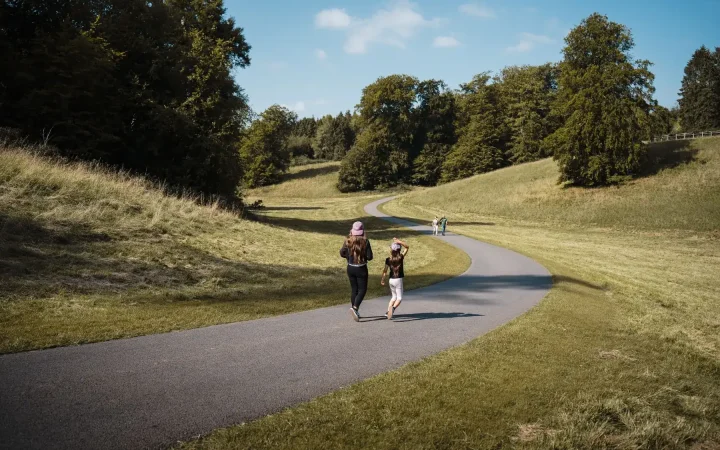
Getting outside turns exercise into an outing. A hike at a normal pace through hilly ground is listed at 5.3 METs, and a relaxed bike ride under 10 mph at 4.0.
Active commuting builds activity into time you already spend traveling. Walking to work or class (4.0 METs) and cycling for transportation at moderate effort (6.8 METs) both count. If your trip is long, walk or cycle part of it, such as to a farther bus stop or a parking spot at the edge of the lot.
- Start with routes you already know, and choose daylight hours while you build confidence.
- Wear a helmet on a bike and follow local traffic rules.
- For hikes, bring water, check the weather and tell someone your route.
Walking is the simplest version of all of this. Our walking for weight loss guide has step goals and a beginner plan.
Sports, playground games and family activity
Casual games are some of the most enjoyable ways to move, and many are surprisingly active. Casual soccer is listed at 7.0 METs, shooting baskets at 5.0 and Frisbee at 3.0.
If you have kids, playtime counts for you as well. The Compendium lists adults playing children’s games such as hopscotch, 4-square or playground equipment at 5.8 METs at moderate effort.
- Join a recreational league, a pick-up game or a local walking or running group.
- Make weekend plans active: a family bike ride, a park scavenger hunt or a game of tag.
- Bring a ball, a Frisbee or a jump rope to the park instead of just watching from a bench.
Some people find it easier to stay consistent when someone else is expecting them. Our guide on having an accountability partner covers how to set that up.
Gardening and yard work
Gardening mixes walking, lifting, digging and bending, and it gives you a reason to come back day after day. General gardening at moderate effort is listed at 3.8 METs, weeding at 4.5 and pushing a walk-behind mower at 5.5.
A 2023 randomized trial in Colorado gave 291 adults who hadn’t gardened in the previous two years either a community garden plot or a spot on a waiting list. By autumn, the gardeners’ moderate-to-vigorous activity had risen by about 6 minutes a day more than the control group’s, though that estimate was imprecise (its confidence interval included no difference). Their stress and anxiety also fell more.
BMI and waist size didn’t differ between the groups, though. Gardening is a good way to add movement and enjoy being outdoors, but don’t expect it to change your weight by itself.
Home workouts that don’t feel like a chore
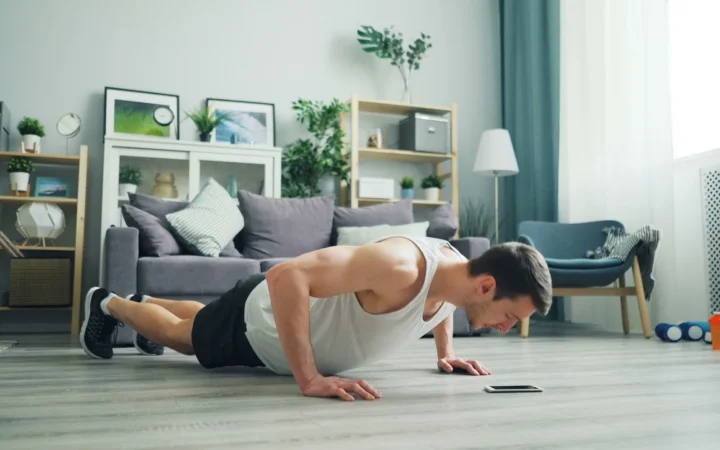
Home workouts are the most convenient option when weather, time or childcare gets in the way. The key is to make them short and varied enough that you look forward to them.
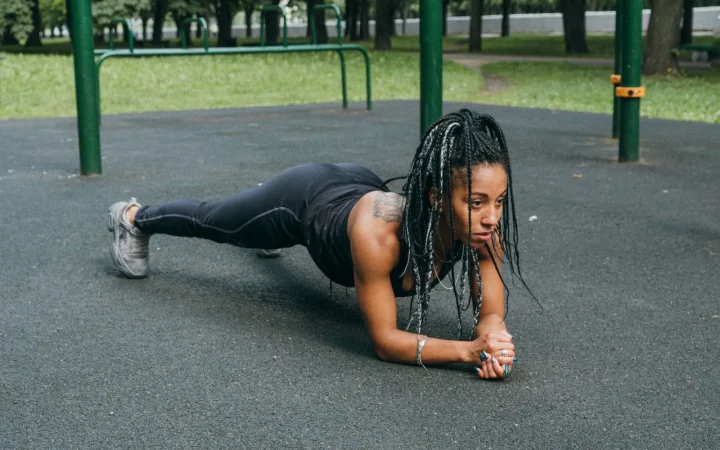
- Bodyweight circuits. Squats, push-ups against a counter, lunges and step jacks done back to back for 15 to 20 minutes.
- Follow-along videos. Dance, cardio or strength videos make the time pass quickly; the Compendium lists cardio-resistance video workouts at 4.0 METs for moderate effort and 6.0 for vigorous.
- Jump rope. Even at a slow pace it’s vigorous, so start with short intervals, such as 30 seconds on and 60 seconds off.
- Stairs. A few trips up and down between tasks add up across the day.
The CDC also recommends muscle-strengthening activity at least 2 days a week that works all the major muscle groups, and bodyweight circuits are an easy way to cover that at home.
A sample week of fun, gym-free fitness
This week mixes several activities so nothing gets stale. Swap any day for something else from the table that you enjoy more.
| Day | Activity | Time | Approx. calories (70 kg) |
|---|---|---|---|
| Monday | Dance workout video in the living room (5.5 METs) | 30 min | About 200 |
| Tuesday | Walk to and from errands or work (4.0 METs) | 30 min | About 145 |
| Wednesday | Bodyweight circuit (6.0 METs) | 20 min | About 145 |
| Thursday | Easy bike ride (4.0 METs) | 30 min | About 145 |
| Friday | Bodyweight circuit (6.0 METs) | 20 min | About 145 |
| Saturday | Hike with friends or family (5.3 METs) | 60 min | About 390 |
| Sunday | Playground games or a pick-up game with the kids (5.8 METs) | 30 min | About 215 |
What this looks like in practice
That’s 220 minutes of moderate or vigorous activity, comfortably above the CDC’s 150-minute target, with two strength-focused days built in. For a 70-kg adult it adds up to roughly 1,390 calories by the Compendium formula.
About 270 of those calories would have been burned anyway just sitting for those 220 minutes, so the extra is closer to 1,100 a week. That’s a meaningful boost, but it shows why food choices usually supply most of a weight-loss deficit. To estimate your own daily burn, use our TDEE calculator.
Common mistakes that make fitness feel like a chore
- Picking an activity because it “burns the most.” A slightly lower-calorie activity you love will usually beat one you avoid.
- Going all out on day one. Start with 10 to 15 minutes and build up so the activity stays enjoyable.
- Doing the same thing every day. Rotating two or three favorites keeps things fresh and gives you a backup when the weather or your schedule changes.
- Counting only “real” workouts. Brisk walks, active play and yard work all count when they get you to a moderate effort.
- Eating back estimated calories. The numbers above are averages, not measurements, so don’t treat them as a license for extra snacks.
If you want a side-by-side look at more structured options, see our guide to the top workouts to burn fat.