Portion control works best when the right amount becomes the easy amount. Build most meals on a plate that is half vegetables, use your hand as a rough guide when you’re out, and use a food scale for a few weeks to recalibrate on the calorie-dense foods that are easiest to over-pour.
This guide covers why portion size matters so much, how the plate method and hand portions work, when a scale is worth it, the mistakes that undo good intentions, and what a portion-controlled day looks like.
You don’t need to weigh every bite forever. The aim is to retrain your eye, then let simple habits do the work.
Why portion size matters more than you think
Most of us eat what is put in front of us, and we rarely notice when portions grow. That is the main reason portion control is worth learning, even if you already eat fairly well.
A 2015 Cochrane review pulled together 72 studies and found that people consistently eat more when offered larger portions, packages or plates. The authors estimated that if smaller sizes were kept up across the whole diet, adults and children in the UK might eat roughly 144 to 228 fewer calories a day.
That estimate comes with caveats. Most studies were short, the review rated the evidence overall at unclear or high risk of bias, and it’s uncertain whether shrinking portions that are already small helps as much as trimming very large ones.
Portion vs. serving: not the same thing
The National Institute of Diabetes and Digestive and Kidney Diseases (NIDDK) draws a useful line. A serving is the amount listed on the Nutrition Facts label. A portion is how much you actually choose to eat.
The NIDDK also stresses that the serving size on a label is not a recommendation. If a frozen lasagna lists 280 calories per 1-cup serving and you eat 2 cups, you’re getting 560 calories.
The plate method: the easiest place to start
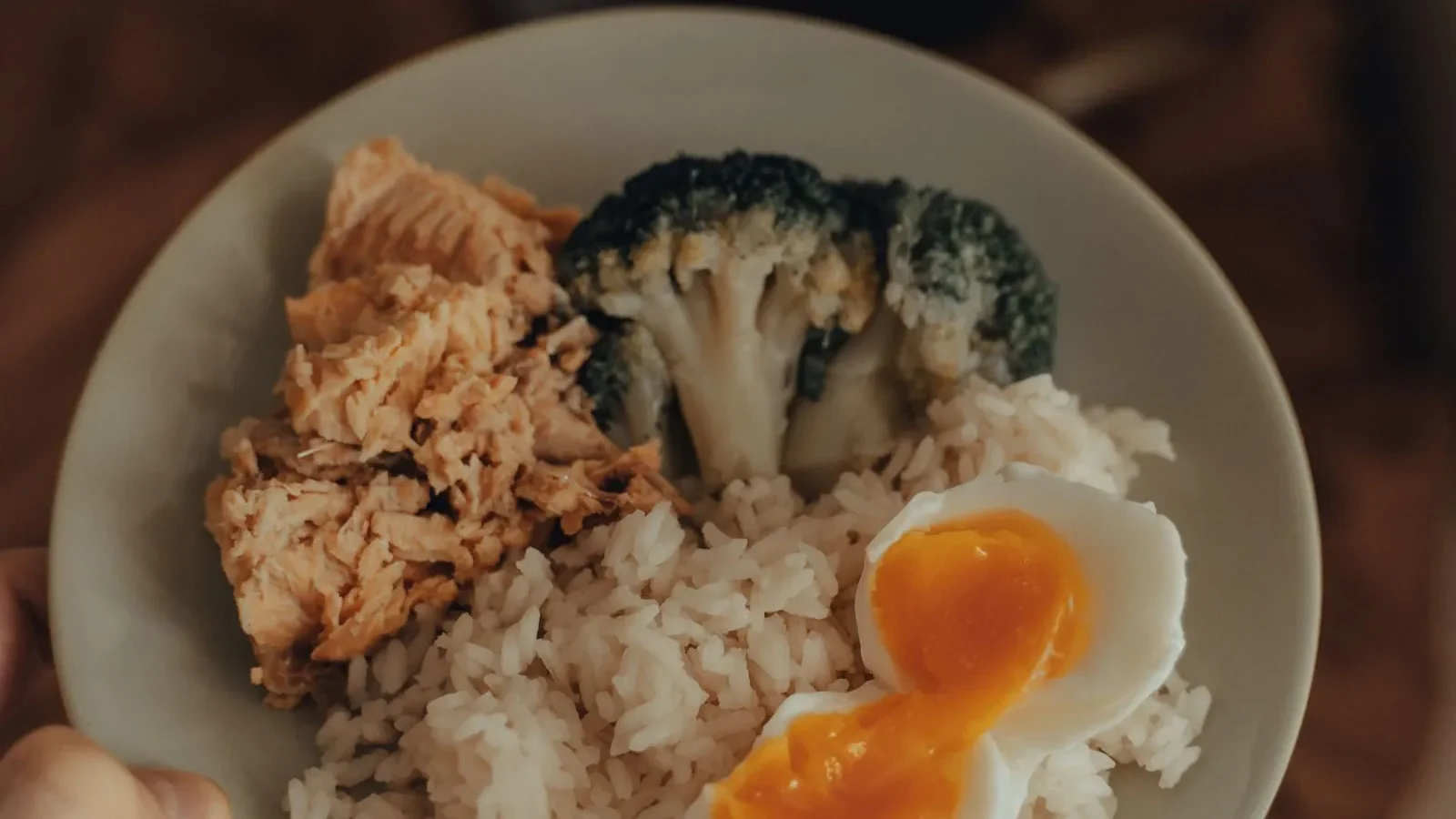
The plate method sets up a balanced meal without any counting. The CDC describes it in its diabetes meal-planning guidance, but the layout works well for most adults:
- Start with a 9-inch dinner plate, about the length of a business envelope.
- Fill half with nonstarchy vegetables such as salad, green beans or broccoli.
- Fill one quarter with a lean protein such as chicken, beans, tofu or eggs.
- Fill one quarter with carb foods such as grains, potatoes, rice, pasta or fruit.
- Drink water or a low-calorie drink such as unsweetened iced tea.
| Plate section | What goes there | Easy examples |
|---|---|---|
| Half | Nonstarchy vegetables | Salad greens, broccoli, green beans, peppers, zucchini |
| One quarter | Lean protein | Chicken, fish, eggs, tofu, beans |
| One quarter | Carb foods | Brown rice, potatoes, pasta, whole-grain bread, fruit |
| On the side | Drink | Water, sparkling water, unsweetened tea |
There is some trial evidence behind the idea. In a six-month trial, 130 adults with obesity and type 2 diabetes either used a commercial portion-control plate every day or received usual dietary teaching.
The plate group lost an average of 1.8% of their body weight versus 0.1% for usual care, and more of them needed a reduction in their diabetes medication (26% vs. 11%). The result is modest and comes from one specific group, but it shows a simple visual tool can shift habits.
Your hand as a portable portion guide
You can’t bring a measuring cup to a restaurant, but you always have your hand. The CDC offers these rough comparisons for estimating portions on the go:
| Hand guide | Roughly equals | Use it for |
|---|---|---|
| Palm (no fingers) | 3 ounces | Meat, fish or poultry |
| Fist | 1 cup or 1 medium fruit | Rice, pasta, cereal, fruit |
| Cupped hand | 1–2 ounces | Nuts or pretzels |
| Thumb (tip to base) | 1 ounce | Cheese or meat |
| Thumb tip (to first joint) | 1 tablespoon | Peanut butter, dressing, mayo |
| Fingertip (to first joint) | 1 teaspoon | Oil, butter |
Hands vary in size, so treat these as estimates rather than measurements. They’re most useful for eating out, at parties and anywhere you can’t weigh food.
When a food scale actually helps
A scale is a learning tool, not a life sentence. The NIDDK notes that you don’t need to measure everything you eat for the rest of your life, just long enough to learn typical serving and portion sizes.
It also isn’t magic. In a one-year trial of 186 women with overweight or obesity, one group was taught to choose portions using tools such as food scales, one structured meals around pre-portioned foods, and one got standard advice to eat less while choosing healthy foods.
All three groups lost weight, averaging about 6% of starting weight at 12 months, and no approach beat the others at 6 or 12 months. The pre-portioned group lost weight faster at first but regained faster later, and use of every strategy declined over time.
So a scale earns its place in specific situations: when you’re starting out, when progress has stalled, and with calorie-dense foods where a small eyeballing error adds up quickly.
| Food | Measured portion | Calories (USDA) |
|---|---|---|
| Olive oil | 1 tablespoon (13.5 g) | About 119 |
| Smooth peanut butter | 2 tablespoons (32 g) | About 191 |
| Almonds | 1 ounce, about 23 nuts (28 g) | About 164 |
| White rice, cooked | 1 cup (158 g) | About 205 |
| Spaghetti, cooked | 1 cup, not packed (124 g) | About 196 |
A heaping “tablespoon” of peanut butter or a free-poured glug of oil can easily be double the measured amount. Weighing these foods for a couple of weeks is the fastest way to see how your usual portions compare.
If weighing or tracking food makes you anxious, or you have a history of disordered eating, skip the scale. The plate method and hand guide work without numbers, and a doctor or registered dietitian can help you find an approach that feels safe.
Slow down and change your setup
How you eat matters as much as what’s on the plate. A 2014 meta-analysis of 22 studies found that eating more slowly led people to eat less at that meal than eating quickly. Hunger at the end of the meal, and up to 3.5 hours later, didn’t differ, although results varied a lot between studies.
Your surroundings can do some of the work too. The NIDDK suggests:
- Serve one portion on a plate instead of eating from the box or bag.
- Split large packages of snacks into single servings as soon as you get home.
- Use smaller dishes, bowls and glasses.
- Avoid eating in front of the TV, while driving or while busy with something else.
- Freeze extra food in single servings so you aren’t tempted to finish the batch.
- Eat meals at regular times, since skipping meals may lead to overeating later.
Eating out without overthinking it
Restaurant portions are where the hand guide shines. The CDC notes that one restaurant entrée can equal 3 or 4 servings.
- Share a meal, or box up half before you start eating.
- Order a salad with dressing on the side, or a grilled appetizer and a vegetable side instead of a full entrée.
- Ask for the bread or chip basket to be taken away.
- Pick the small size of drinks and desserts.
- Check posted calorie information on menus and menu boards.
Common portion-control mistakes
- Shrinking the vegetables too. Vegetables are the one portion you can let grow. Make them the biggest thing on the plate.
- Eyeballing oils, dressings and nut butters. These are nutritious but calorie-dense, so measure them for a while.
- Treating “healthy” as unlimited. Nuts, granola, dried fruit and smoothies still count.
- Cutting portions so small you’re always hungry. Keep a palm-sized protein at meals; our guide to how much protein you need to lose weight explains why.
- Forgetting drinks. Juice, soda and sweet coffee drinks are portions too.
- Expecting a tool to do the work. As the one-year trial showed, habits fade. Pick one or two strategies you can keep using.
What a portion-controlled day looks like
Here is how the plate and hand guides translate into ordinary meals. Adjust the amounts to your hunger, activity and goals.
| Meal | What’s on the plate | Portion cue |
|---|---|---|
| Breakfast | Oatmeal with berries and plain Greek yogurt | A fist of oats, a fist of berries, a fist of yogurt |
| Lunch | Big salad with chicken, beans and vinaigrette | Half the bowl greens, a palm of chicken, a fist of beans, a thumb-tip of dressing |
| Snack | Apple with cheese | One medium fruit and a thumb of cheese |
| Dinner | Salmon, roasted vegetables and potatoes | Half the plate vegetables, a palm of salmon, a fist of potatoes, a fingertip of oil per serving |
If you want a number to aim for, portion control works best alongside a moderate calorie target. Our guide to how a calorie deficit works explains how to set one.
Measuring cups and spoons, a food scale and sturdy containers for single-serving leftovers cover most of what you need. Our roundup of weight-loss products covers other tools worth considering.