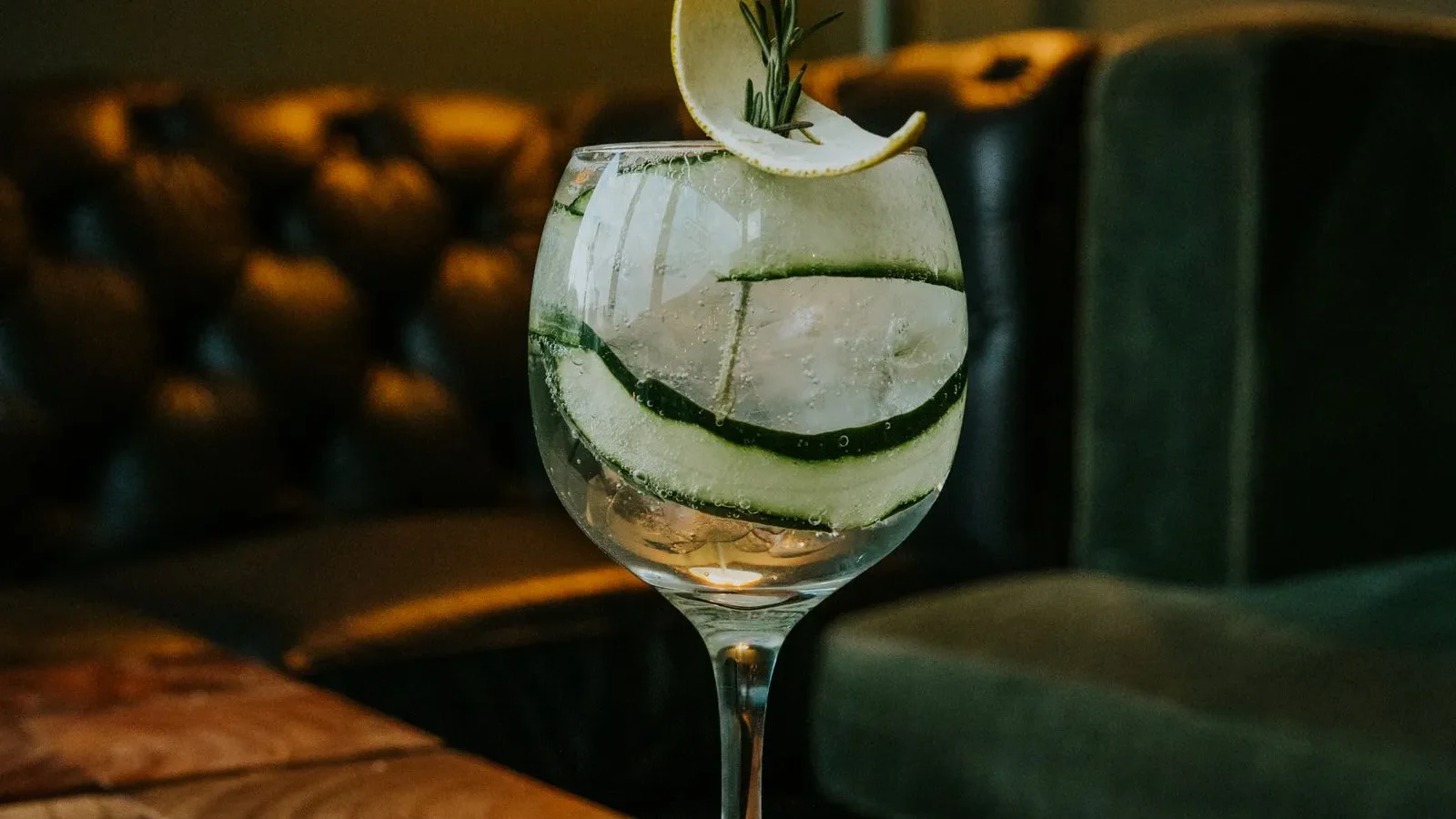
A gin and tonic made with a standard 1.5-ounce pour of 80-proof gin and 4 to 6 ounces of regular tonic water has about 140 to 160 calories, based on USDA FoodData Central values. Roughly 97 of those calories come from the gin and the rest from the sugar in the tonic.
Switching to diet tonic brings the drink down to about 100 calories, but stronger gin, bigger pours and refills push it up quickly. This guide breaks down gin by proof and pour size, compares regular and diet tonic, and shows how a gin and tonic stacks up against beer, wine and other drinks.
It also covers what research says about alcohol and body weight, the current US guidance on drinking, and who shouldn’t drink at all. None of this is a reason to start drinking; the latest Dietary Guidelines advise drinking less for better overall health.
Gin and tonic calories at a glance
All figures below are calculated from USDA FoodData Central values for distilled spirits and tonic water. Garnishes like a lime wedge add very little.
| Drink | What’s in it | Calories (approx.) |
|---|---|---|
| Gin and tonic, lighter mix | 1.5 fl oz 80-proof gin + 4 fl oz regular tonic | About 138 |
| Gin and tonic, taller mix | 1.5 fl oz 80-proof gin + 6 fl oz regular tonic | About 159 |
| Stronger gin | 1.5 fl oz 90-proof gin + 6 fl oz regular tonic | About 173 |
| Double gin and tonic | 3 fl oz 80-proof gin + 6 fl oz regular tonic | About 256 |
| Gin and diet tonic | 1.5 fl oz 80-proof gin + 6 fl oz diet tonic | About 97–100 |
| Gin and soda | 1.5 fl oz 80-proof gin + club soda | About 97 |
For a ready-made comparison, USDA’s survey database lists a mixed “gin and tonic” at about 190 calories per drink (225 grams, about 7.5 fluid ounces). That entry contains about 19 grams of alcohol, more than one standard drink, which points to a larger pour of gin than the 1.5-ounce standard.
Calories in gin by proof and pour size
Gin has no carbohydrate, fat or protein to speak of, so almost all of its calories come from alcohol. Alcohol provides about 7 calories per gram, which is why stronger gin has more calories per ounce.
Proof is twice the alcohol-by-volume percentage, so 80 proof means 40% alcohol. Check the bottle, because gins are sold at different strengths.
| Gin strength | 1 fl oz | 1.5 fl oz (standard shot) | 2 fl oz |
|---|---|---|---|
| 80 proof (40% ABV) | About 64 | About 97 | About 128 |
| 86 proof (43% ABV) | About 70 | About 105 | About 139 |
| 90 proof (45% ABV) | About 73 | About 110 | About 146 |
| 94 proof (47% ABV) | About 77 | About 116 | About 153 |
| 100 proof (50% ABV) | About 82 | About 124 | About 164 |
The pour matters as much as the proof. The National Institute on Alcohol Abuse and Alcoholism (NIAAA) notes that standard drink amounts may not match what people actually pour. A free-poured 2-ounce measure of 80-proof gin has about 31 more calories than a 1.5-ounce shot before any tonic goes in.
Regular vs. diet tonic water
Despite the name, regular tonic water is a sweetened soft drink, not water. USDA lists it at about 34 calories and 8.8 grams of sugar per 100 grams.
| Tonic water | Amount | Calories (approx.) | Sugar (approx.) |
|---|---|---|---|
| Regular | 4 fl oz | 41 | 11 g |
| Regular | 6 fl oz | 62 | 16 g |
| Regular | 12 fl oz bottle | 124 | 32 g |
| Diet | Any amount | 0 to about 1 per 100 g | 0 g |
| Club soda | Any amount | 0 | 0 g |
The diet figures come from the label data for diet tonic waters listed in FoodData Central’s branded-foods database. “Light” or reduced-sugar tonics fall somewhere in between, and recipes change, so read the Nutrition Facts panel on the bottle you buy.
How a gin and tonic compares with other drinks
Serving sizes vary a lot between drinks, so compare like with like. These figures are calculated from USDA FoodData Central.
| Drink | Serving | Calories (approx.) |
|---|---|---|
| Gin and regular tonic | 1.5 fl oz gin + 6 fl oz tonic | 159 |
| Gin and diet tonic | 1.5 fl oz gin + 6 fl oz diet tonic | 97–100 |
| Regular beer | 12 fl oz | 153 |
| Light beer | 12 fl oz | 103 |
| Red wine | 5 fl oz | 125 |
| White wine | 5 fl oz | 121 |
| Hard seltzer | 12 fl oz | 86 |
| Margarita (USDA survey entry) | 1 drink (225 g, about 7.5 fl oz) | 275 |
A gin and diet tonic is one of the lower-calorie options on the list, but calories are only part of the picture. Each of these drinks still contains alcohol, and the NIAAA notes that many light beers have about 85% as much alcohol as regular beer.
Alcohol and weight: what the research says
The link between drinking and body weight is less straightforward than the calorie math suggests, but a few findings are consistent.
Longer-term studies are mixed. A 2015 review found that light-to-moderate drinking was generally not linked with weight gain in recent prospective studies, while heavy drinking was more consistently linked with gaining weight.
The authors caution that people who drink moderately may have healthier lifestyles in general, which could explain part of that finding. A 2010 review noted that alcohol taken before or with meals tends to increase how much people eat, and that binge drinking may raise the risk of obesity.
In practice, the calories from drinks add to everything else you eat. If you’re trying to lose weight, they count toward the same daily total; our guide to how a calorie deficit works explains why that total matters.
What the US guidelines say about drinking
In the United States, one standard drink contains about 14 grams of pure alcohol. According to the NIAAA, that equals 1.5 fluid ounces of 40% distilled spirits such as gin, 5 ounces of 12% wine, or 12 ounces of 5% beer.
The CDC’s page on moderate alcohol use says adults of legal drinking age can choose not to drink or to drink in moderation. It defines moderate drinking as two drinks or less in a day for men and one drink or less in a day for women, but notes that even moderate drinking may raise the risk of death and other harms compared with not drinking, and that less than one drink a day can raise the risk of certain cancers.
The newest Dietary Guidelines for Americans, for 2025–2030, don’t list daily drink amounts. Their advice is to consume less alcohol for better overall health.
Who shouldn’t drink at all
The CDC and the Dietary Guidelines say some people should avoid alcohol completely, including people who:
- Are pregnant or might be pregnant.
- Are younger than 21.
- Take medications that can interact with alcohol.
- Have certain medical conditions, such as some liver diseases.
- Are recovering from alcohol use disorder or can’t control how much they drink.
The Dietary Guidelines also advise people with a family history of alcoholism to be mindful of their drinking. If you’re concerned about your drinking or someone else’s, talk with a doctor. The NIAAA’s online Alcohol Treatment Navigator explains treatment options and how to find quality care.
Lighter choices if you do drink
If you already drink and want to cut calories, these steps make the biggest difference:
- Switch to diet tonic or club soda. It saves about 62 calories and 16 grams of sugar per 6 ounces of regular tonic.
- Measure the gin. Use a jigger so a “single” stays at 1.5 ounces.
- Check the proof. A 100-proof gin has about 27 more calories per shot than an 80-proof one.
- Decide on a limit in advance. Calories and alcohol add up with each refill.
- Alternate with water or a zero-calorie drink. It slows the pace of the evening.
- Plan your food. Since alcohol tends to increase how much people eat, have a meal or a planned snack rather than grazing.
What this looks like in practice
Say someone has three gin and tonics on a Saturday, each with 1.5 ounces of 80-proof gin and 6 ounces of regular tonic. That’s about 480 calories and roughly 48 grams of sugar from the tonic.
The same three drinks with diet tonic come to about 290 to 300 calories. Stopping at one gin and diet tonic is about 97, and a non-alcoholic choice like club soda with lime has essentially none.
To see how drinks fit your daily calorie budget, use our calorie calculator. For other everyday changes, our weight-loss tips and our look at why losing weight can be difficult may help.