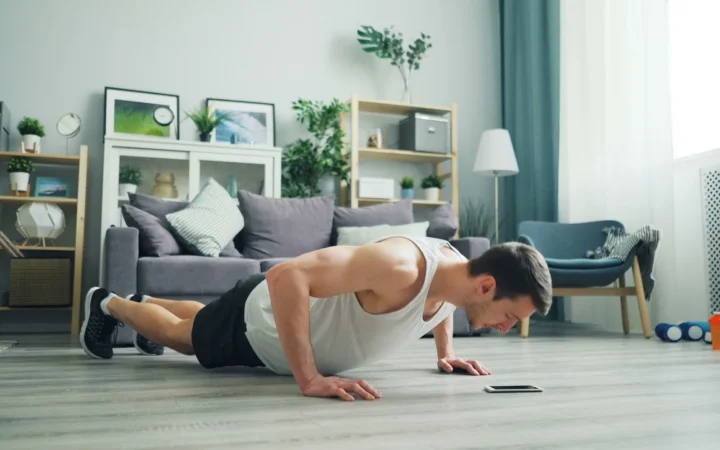
If you’re hoping to get skinny with Xbox games, here’s the honest answer: games you play sitting down with a controller won’t do it, but active video games, often called exergames, can turn some of your screen time into real movement. Dance, boxing, fitness and VR games can raise your heart rate, and the hardest ones reach vigorous effort.
The catch is that most active gaming lands at light-to-moderate intensity, and studies show only small effects on weight. Gaming works best as a fun way to replace sitting and build toward your weekly activity target, alongside eating a little less than you burn.
A better goal than “skinny” is getting fitter, stronger and more active. Below you’ll find what the research shows, which types of games move you most, how to make a session a real workout and how to keep screen time in balance.
What the research says about active gaming and calories
Researchers have measured energy use during active video games for years, usually in a lab with equipment that measures how much oxygen players use. The results vary a lot from game to game.
Those two findings fit together. Many games, especially gentle ones, sit in the light range, while more demanding games played with full effort can reach moderate intensity or higher.
Game type matters a lot. A 2021 meta-analysis of 16 studies on boxing games found intensity ranging from very light to vigorous. Kinect boxing games for Xbox averaged 5.3 METs, compared with 3.8 METs for Nintendo Wii boxing, though the authors noted inconsistency and possible bias across the studies.
Much of this early research tested motion-sensing systems such as Kinect and Wii games. Hardware and game libraries change, so check the console maker’s or publisher’s current pages to see which motion, fitness or VR games work with your setup.
Do active video games help with weight loss?
A little, in some studies. The effects on weight are smaller and less consistent than the effects on calories burned.
- Young adults: In the 2025 review of 14 trials, four measured body weight or BMI, and only one found a significant drop, a BMI change of 0.29 points. The authors called the weight results mixed.
- Virtual reality: A 2025 meta-analysis of 12 randomized trials found that VR exergames had small but significant effects on body weight, BMI and body fat percentage.
- Children and teens: A 2026 meta-analysis of 39 randomized trials with 3,232 young people found that active games reduced BMI and body fat percentage, but not body weight, and the change in BMI z-score was very small. Effects were clearer in adolescents and in programs lasting more than 12 weeks.
The takeaway: active gaming adds movement and may nudge body composition in the right direction, but it isn’t a stand-alone weight-loss plan. To lose weight, you’ll also need a moderate calorie deficit from what you eat and drink.
Which kinds of games get you moving most
The 2024 Adult Compendium of Physical Activities, a research catalog of energy costs for adults aged 19 to 59, added a video game category. Its values show how much the style of play matters.
Calories below are for a 70-kg (154-lb) adult, calculated as MET × 3.5 × body weight in kg ÷ 200 per minute. They include the calories you’d burn at rest. Intensity uses the CDC’s cut-offs: 3 to 5.9 METs is moderate and 6 or more is vigorous; anything below 3 is lighter than moderate.
| Type of play (Compendium description) | METs | Intensity | Calories in 30 min (70 kg) |
|---|---|---|---|
| Seated, handheld controller (inactive) | 1.3 | Essentially sitting | About 50 |
| Handheld controller, light effort | 1.5 | Very light | About 55 |
| Light-effort active games, such as yoga or bowling games | 2.3 | Light (below moderate) | About 85 |
| Motion-sensing game using mainly the upper body | 3.0 | Moderate (just) | About 110 |
| Motion-sensing game using the total body, moderate effort | 4.0 | Moderate | About 145 |
| Motion-sensing game using the total body, moderate-to-vigorous effort | 5.0 | Moderate | About 185 |
| Total-body exergames, workouts or dancing, vigorous effort | 7.5 | Vigorous | About 275 |
| Virtual reality fitness, vigorous | 9.8 | Vigorous | About 360 |
In short, look for games that make you use your legs and whole body: dance and rhythm games, boxing or punching games, guided fitness and workout games, and VR fitness games. Gentle games count as light activity, and upper-body-only games barely reach moderate, but both beat sitting still.
How to make gaming a real workout
The same game can be a gentle stretch or a sweaty session depending on how you play it. These habits push it toward real exercise.
- Play standing and move big. Bend your knees, step into punches and use your whole body rather than flicking your wrists.
- Raise the difficulty over time. When a level feels easy, move up a setting or choose a faster song or workout.
- Check your effort. At moderate intensity you can talk but not sing; if you can’t say more than a few words without pausing for breath, you’re at vigorous effort.
- Play in blocks. The CDC notes you can spread activity across the week in smaller chunks, so two 15-minute sessions work as well as one 30-minute session for your weekly total.
- Add strength work. The CDC also recommends muscle-strengthening activity at least 2 days a week. Choose fitness games that include squats, lunges or other strength moves, or add your own between rounds.
- Warm up and cool down. Spend a few minutes on an easy level or marching in place before you go hard, and finish with a slower song.
Making regular gaming more active
Not every session needs to be an exergame. If you mostly play seated games, try doing 10 squats or a short march every time you respawn or hit a loading screen, standing up between matches, and taking a short walk after a long session.
For more ideas like this, see our guide on ways to burn more calories while watching television.
A sample week of active gaming
This week reaches about 150 minutes of activity, the CDC’s weekly target for moderate activity, with two strength days and some time away from the screen.
| Day | Activity | Time |
|---|---|---|
| Monday | Dance or rhythm game at a level that gets you breathing harder | 30 min |
| Tuesday | Fitness game with strength moves, or a boxing game plus 10 minutes of squats and push-ups | 30 min |
| Wednesday | Brisk walk outside | 30 min |
| Thursday | Boxing or VR fitness game in two 10-minute blocks | 20 min |
| Friday | Fitness game with strength moves | 20 min |
| Saturday | Dance game with friends or family, or a bike ride | 20–30 min |
| Sunday | Rest, or a gentle walk | Optional |
What this looks like in practice
Say a 70-kg adult swaps 30 minutes of seated gaming (1.3 METs) for 30 minutes of a total-body motion game at moderate effort (4.0 METs). By the Compendium formula, that’s about 145 calories instead of about 50, or roughly 100 extra calories per session.
Do that five times a week and you burn about 500 extra calories. That’s a worthwhile boost for your health and fitness, but it’s easy to cancel out with snacks, which is why pairing active gaming with a moderate calorie deficit matters. Our TDEE calculator can help you estimate your daily needs.
Keep screen time in balance
The CDC’s advice for adults is to move more and sit less. It notes that adults who sit less and do any amount of moderate or vigorous activity gain some health benefits.
Active games are a smart swap for some seated screen time, but they shouldn’t be your only activity. Outdoor walks, bike rides and sports add fresh air, variety and different movement patterns. Our walking for weight loss guide is an easy place to start.
- Set a time limit for seated gaming sessions and use a timer to remind you to get up.
- Make the first game of the day an active one.
- Keep water nearby and avoid eating snacks on autopilot during long sessions.
- For kids and teens, treat active games as one option among many. The CDC recommends 60 minutes or more of moderate-to-vigorous activity every day for ages 6 to 17, so outdoor play and sports still matter.
Safety tips for active gaming
- Clear your space. Move furniture, rugs and pets out of the way and leave room overhead and to the sides.
- Use the safety features and instructions. Read the health and safety warnings for your games and hardware, and use any play-area boundary settings your VR headset offers.
- Control your punches. In boxing games, don’t snap your elbows straight, and keep movements smooth rather than jerky.
- Stop if you feel unwell. Take a break if you feel dizzy, sick or disoriented, especially in VR.
- Build up gradually. Vigorous games can leave you sore if you go from zero to an hour on day one.