A good snack bar is a convenience food, not a health food. The best one for you is the bar that fits your snack in calories, brings some protein or fiber, keeps added sugar low and doesn’t upset your stomach.
The label tells you almost everything you need. This guide walks through each line worth checking, explains sugar alcohols and ultra-processing in plain terms, and compares bar types with whole-food snacks you can make in a minute.
We don’t rank brands, because recipes change and what suits you depends on why you’re reaching for a bar in the first place.
When a snack bar makes sense, and when whole food is better
Bars earn their place when you need something that survives a bag, a car or a long day without a fridge. Think commutes, travel, hikes or a gap between meetings where the alternative is a vending machine.
At home or at a desk with a fridge, whole foods usually do the job at least as well. Plain Greek yogurt, fruit, eggs or a handful of nuts need no label decoding and often give you more food for similar calories.
How to read a snack bar label
Start with serving size and calories
Every number on the Nutrition Facts label refers to one serving. The FDA advises checking the serving size and servings per container first, because if a package holds two servings and you eat both, you double the calories and nutrients.
Some packages that could be eaten in one sitting carry a dual-column label showing both per-serving and per-package numbers. Make sure you’re reading the column that matches what you’ll eat.
Protein
The FDA’s general guide is that 20% of the Daily Value (DV) or more per serving is high, and the DV for protein is 50 g. So 10 g of protein per serving is high by that guide; many labels don’t show a %DV for protein, so check the grams.
Protein matters most if the bar has to tide you over for hours. For how a bar fits your whole day, see our guide to how much protein you need to lose weight.
Fiber, including added fibers
The DV for fiber is 28 g, so about 5.6 g per serving is high. Some bars reach that with added fibers such as chicory root or inulin, which can cause gas in larger amounts.
In a small trial of 26 healthy adults, up to 10 g a day of native inulin and up to 5 g of oligofructose (a shorter form) were well tolerated. A 10 g dose of oligofructose noticeably increased symptoms, mostly gas followed by bloating.
Added sugars
The DV for added sugars is 50 g a day on a 2,000-calorie diet. The current Dietary Guidelines (2025–2030) are stricter: they recommend no amount of added sugars and say one meal should contain no more than 10 g. On a bar, 5% DV (2.5 g) or less is low and 20% DV (10 g) or more is high.
Total sugars include sugar naturally present in fruit and milk. A bar made mostly of dried fruit can show plenty of total sugar but little added sugar, so read both lines.
Sugar alcohols
Sugar alcohols (polyols) sweeten many low-sugar bars. Most have names ending in “-itol,” such as sorbitol, maltitol, xylitol and erythritol; isomalt and hydrogenated starch hydrolysates are exceptions. Erythritol tends to cause fewer gut symptoms. Some labels list them on their own line under carbohydrate; otherwise, check the ingredient list.
A 2017 systematic review of 79 studies found polyols can cause dose-dependent gas, abdominal discomfort and a laxative effect, both in healthy people and in people with irritable bowel syndrome (IBS). Absorption also got worse when several polyols were eaten together.
If a “sugar-free” bar leaves you bloated, this is a likely suspect. Our list of foods that cause bloating covers other common triggers.
The ingredient list
Two bars with the same numbers can be very different foods. One may be mostly nuts, oats and fruit; another may be built from protein isolates, syrups, added fibers and sweeteners.
The practical takeaway: a bar doesn’t need to be perfect, but let bars fill gaps rather than replace whole-food snacks most days.
What to check: a quick label checklist
| Label item | What to look for | Why it matters |
|---|---|---|
| Serving size | Is the whole bar one serving? | All the numbers refer to one serving |
| Calories | A size that matches the snack you need | A large bar plus a meal soon after adds up |
| Protein | 10 g (20% DV) or more if it must keep you full | Helps a bar act like a real snack |
| Fiber | About 5.6 g (20% DV) or more is high | Added fibers like inulin may cause gas |
| Added sugars | 2.5 g (5% DV) or less is low; 10 g (20% DV) or more is high | The daily DV is 50 g |
| Sugar alcohols | Names often ending in “-itol,” plus isomalt; try one bar before buying a box | Gas, discomfort and laxative effects rise with the dose |
| Ingredients | Mostly recognizable foods such as nuts, oats, seeds and fruit | Gives you a sense of how processed the bar is |
| Allergens | Peanuts, tree nuts, milk, soy, wheat | Recipes change, so recheck the allergen statement |
Snack bar types at a glance
Product names vary, but most bars fit one of these types. Use the checklist on whichever you pick.
| Bar type | Often chosen for | Check closely |
|---|---|---|
| Protein bars | Staying full, after workouts | Sugar alcohols, added fibers, calories per bar |
| Fruit-and-nut bars | Short, food-first ingredient lists | Calories (nuts are dense) and total sugars from dried fruit |
| Granola and oat bars | A lighter, grain-based snack | Added sugars and low protein |
| High-fiber bars | Adding fiber | Inulin or chicory root dose if you’re sensitive |
| Low-sugar or “keto” bars | Cutting added sugar or carbs | Sugar alcohols and how your stomach reacts |
| Meal replacement bars | Standing in for a meal | Calories; they may be too much for a snack |
Whole-food snacks that do the same job
These options need a minute of prep or a fridge, but they’re simple to compare. Values are from USDA FoodData Central and rounded.
| Snack | Amount | Calories | Protein | Fiber |
|---|---|---|---|---|
| Plain nonfat Greek yogurt with blueberries | 170 g container + ½ cup berries (74 g) | About 142 | 17.9 g | 1.8 g |
| Edamame, prepared from frozen | 1 cup (155 g) | About 188 | 18.4 g | 8.1 g |
| Hard-boiled eggs | 2 large (100 g) | About 155 | 12.6 g | 0 g |
| Low-fat (2%) cottage cheese | 4 oz (113 g) | About 92 | 11.8 g | 0 g |
| Apple with part-skim mozzarella | 1 medium apple (182 g) + 1 oz cheese | About 167 | 7.4 g | 4.4 g |
| Apple with peanut butter | 1 medium apple + 1 tbsp (16 g) | About 190 | 4.0 g | 5.2 g |
| Almonds | 1 oz, about 23 nuts (28 g) | About 164 | 6.0 g | 3.5 g |
| Hummus with baby carrots | 2 tbsp (30 g) + about 10 carrots (100 g) | About 106 | 3.0 g | 4.5 g |
| Air-popped popcorn | 3 cups (24 g) | About 93 | 3.1 g | 3.5 g |
Compare any bar against this table. If a bar has similar calories but far less protein or fiber, a whole-food option is probably the better deal when you have access to one. For more low-calorie ideas, see our guide to foods with fewer calories.
What this looks like in practice
- Long commute, no fridge: a bar that passes the checklist, or an apple and a small bag of almonds.
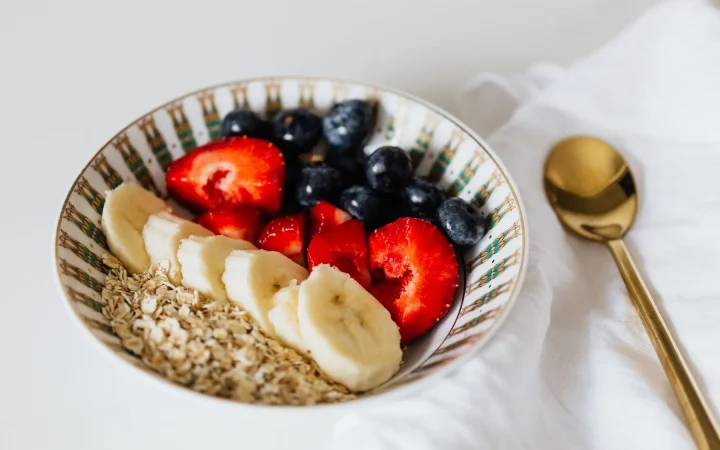
- Afternoon slump at your desk: Greek yogurt with berries gives about 18 g of protein for about 142 calories.
- Hiking or travel day: pack bars you’ve already tried, plus fruit and nuts.
- Evening cravings at home: popcorn or fruit first. Our guide to appetite suppressants covers food-first ways to manage cravings.
Keeping a few tried-and-tested bars in your bag is one of the simplest habits in our roundup of weight-loss products.