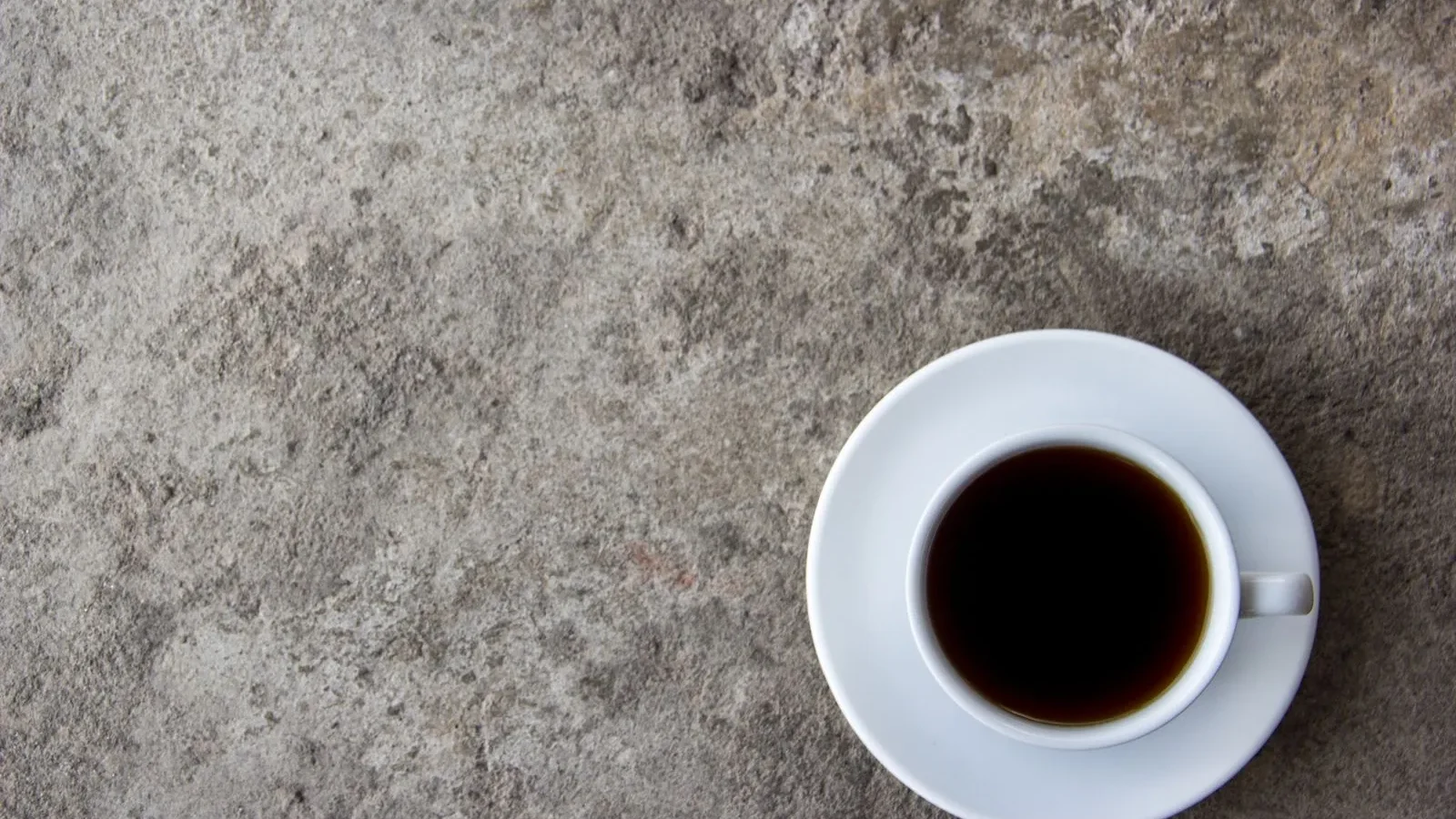
Black coffee won’t make you gain weight. An 8-ounce cup has about 2 calories, and in long-term studies, people who increased their unsweetened coffee intake gained slightly less weight over time, not more.
What can add up is everything that goes into the cup: sugar, syrups, cream, whipped toppings and large milky drinks. Caffeine late in the day can also cut into your sleep, and short sleep tends to raise how much people eat.
This guide compares black coffee with popular coffee drinks using USDA numbers, explains what caffeine does and doesn’t do for metabolism and appetite, covers the FDA’s 400 mg guidance, and shows how to keep your coffee habit working for you.
It depends on what’s in your cup
Coffee itself is almost calorie-free. According to USDA FoodData Central, an 8-fluid-ounce cup of brewed coffee has about 2 calories. Once milk, sugar and toppings come in, the numbers change quickly.
The figures below come from USDA’s generic recipes for common coffee drinks. A “medium” here is about 16 fluid ounces. Coffee-shop versions vary by recipe and size, so check the chain’s nutrition information for the drink you actually order.
| Drink | Size | Calories (USDA) |
|---|---|---|
| Brewed coffee, black | 8 fl oz | About 2 |
| Brewed coffee, black | Medium (16 fl oz) | About 5 |
| Latte, nonfat milk | Medium (16 fl oz) | About 144 |
| Latte, 2% milk | Medium (16 fl oz) | About 206 |
| Flavored latte, 2% milk | Medium (16 fl oz) | About 273 |
| Café mocha, 2% milk | Medium (16 fl oz) | About 317 |
| Frozen blended coffee drink with whipped cream | Medium (16 fl oz) | About 412 |
The add-ins add up
Home coffee can creep up too, especially if you drink several cups a day.
| Add-in | Amount | Calories (USDA) |
|---|---|---|
| Whole milk | 1 tablespoon | About 9 |
| Nonfat milk | 1 fl oz (2 tablespoons) | About 10 |
| Granulated sugar | 1 teaspoon | About 16 |
| Half-and-half | 1 tablespoon | About 20 |
| Heavy cream | 1 tablespoon | About 51 |
Worked example: two teaspoons of sugar and two tablespoons of half-and-half come to about 72 calories a cup. Over three cups, that’s about 216 calories a day. Switching to two tablespoons of nonfat milk and one teaspoon of sugar brings it to about 78 calories, saving roughly 138 calories a day without giving up the habit.
What long-term studies show about coffee and weight
The most direct evidence comes from large studies that followed people for decades.
The takeaway isn’t that coffee melts weight. It’s that plain coffee doesn’t appear to cause weight gain, and that sugar is the add-in worth watching most closely.
Controlled trials point in a similar direction. A 2019 meta-analysis of 13 randomized trials with 606 participants found that caffeine intake was associated with reductions in weight, BMI and body fat. However, the results varied enormously between studies, so the size of any real effect is uncertain.
Does caffeine boost metabolism or curb appetite?
Metabolism: a small, temporary bump
Caffeine does raise energy use slightly. In a 1989 lab study, a single 100 mg dose of caffeine raised resting metabolic rate by 3% to 4% over about two and a half hours in both lean volunteers and volunteers who had previously had obesity.
When volunteers took 100 mg every two hours across a 12-hour day, a total above the FDA’s 400 mg figure, their daily energy use rose by about 150 calories in the lean group and 79 calories in the formerly obese group. That is a modest effect from a lot of caffeine, measured over one day, and it’s easily erased by one sweetened drink.
If you’re considering a supplement that promises to speed up your metabolism, read how fat burners actually work first.
Appetite: mixed evidence
A 2017 review found that caffeine taken between half an hour and four hours before a meal may reduce how much people eat at that meal. Coffee consumed three to four and a half hours beforehand had little effect, and evidence on hunger feelings and appetite hormones was inconclusive.
In other words, coffee may take the edge off hunger for some people, sometimes. It isn’t a reliable appetite suppressant or a substitute for a filling meal.
The sleep connection most people miss
Caffeine’s biggest indirect effect on weight may be through sleep. Short sleep is linked to eating more, and late caffeine can shorten sleep without you noticing.
In a small study of 12 healthy adults who normally slept well, 400 mg of caffeine taken at bedtime, three hours before bed or six hours before bed all disturbed sleep compared with a placebo. Even at six hours, a sleep monitor showed people slept more than an hour less. Their own sleep diaries showed a smaller drop that didn’t reach statistical significance, so many people may underestimate the effect.
That matters for appetite. A 2017 meta-analysis of 11 studies (172 participants) found that partial sleep deprivation increased food intake by about 385 calories a day, with no significant change in calories burned. The pooled studies were small, with 172 people in total, but they point the same way.
A practical rule from the sleep study’s authors: avoid substantial caffeine for at least six hours before bed. If you go to bed at 10 p.m., that means finishing your last regular coffee by about 4 p.m., or earlier if you’re sensitive.
How much caffeine is too much?
The FDA says that for most adults, 400 mg of caffeine a day, about two to three 12-ounce cups of coffee, is not generally associated with negative effects. It also stresses that people vary widely in how sensitive they are to caffeine and how quickly they clear it.
| Drink | Typical caffeine | Source |
|---|---|---|
| Brewed coffee, 8 fl oz | About 95 mg | USDA FoodData Central |
| Regular brewed coffee, 12 fl oz | 113–247 mg | FDA |
| Decaf coffee, 8 fl oz | 2–15 mg | FDA |
| Black tea, 12 fl oz | 71 mg | FDA |
| Energy drink, 12 fl oz | 41–246 mg | FDA |
The FDA lists signs of too much caffeine, including a fast heart rate, palpitations, high blood pressure, trouble sleeping, anxiety, jitters, an upset stomach, nausea and headaches. Caffeine can also be added to dietary supplements and over-the-counter medicines, so count those too.
If you’d rather keep caffeine low, decaf still counts as coffee in the long-term research above. For workouts, our guide to stim-free pre-workouts covers caffeine-free options.
How to keep your coffee habit weight-friendly
- Make black or lightly milked coffee your default. Save sweet, whipped drinks for occasional treats.
- Measure the sugar. Use a teaspoon instead of pouring, then step it down gradually: two teaspoons, then one and a half, then one.
- Order smaller and simpler. Choose the smaller size, skip the whipped cream and ask for fewer pumps of syrup.
- Make lattes at home with nonfat or 2% milk, so you control the milk and sweetener.
- Set a caffeine cutoff about six hours before bed.
- Count coffee drinks as part of your day. A 300-calorie mocha is closer to a snack than a drink, which is worth knowing if you’re tracking a calorie deficit.
A handheld milk frother can make a home latte feel like a treat with whatever milk you choose.
Common coffee mistakes when you’re watching your weight
- Assuming “it’s just coffee.” A medium frozen blended coffee drink with whipped cream can top 400 calories.
- Relying on caffeine to burn fat. The metabolic bump is small and won’t offset a large sweet drink.
- Drinking coffee late in the afternoon. Lost sleep can lead to eating more the next day.
- Swapping coffee for energy drinks. Some contain as much caffeine as a strong coffee, plus added sugar.
- Quitting abruptly. The FDA notes that caffeine withdrawal isn’t dangerous but can be unpleasant, so cut back gradually.