A healthy breakfast for weight management pairs a solid portion of protein, roughly 25–30 g, with fiber-rich foods such as oats, berries, beans or whole-grain bread, at a calorie level that fits the rest of your day. Whether you need to eat breakfast at all is a separate question, and the honest answer from the research is: not necessarily.
Below you’ll find what the trials say about eating versus skipping breakfast, why protein and fiber matter most, a mix-and-match table of breakfast foods, five sample breakfasts with approximate numbers from USDA data, and the mistakes that make breakfast work against you.
No superfoods or strict rules here. Just a meal you can build in a few minutes and repeat.
Should you eat breakfast to lose weight? The evidence is mixed
Breakfast eaters tend to weigh less than breakfast skippers in observational studies. But when researchers randomly assign people to eat or skip breakfast, the effect mostly disappears.
In a 16-week trial, 309 adults with overweight or obesity who were trying to lose weight were randomly assigned to eat breakfast, skip it, or join a control group; 283 finished. The advice changed what people did in the morning, but it had no significant effect on weight loss, whether they had been breakfast eaters or skippers to begin with.
Pooled results point the same way, or slightly the other way. A 2019 meta-analysis in the BMJ of 13 randomized trials found that people assigned to eat breakfast took in about 260 more calories a day and weighed about 0.44 kg more on average than those assigned to skip it. The trials were short and mostly low in quality, so the authors urged caution.
The practical takeaway: breakfast isn’t a fat-loss trick, and neither is skipping it. Pick the pattern that helps you eat well across the whole day. If skipping breakfast leaves you ravenous by 11 a.m., eat it. If you’re not hungry in the morning and your later meals stay on track, that’s fine too. Our guide to intermittent fasting covers the skip-breakfast approach in more detail.
What makes a breakfast “healthy” for weight management
If you do eat breakfast, a few simple features make it more filling for the calories.
Protein: aim for roughly 25–30 g
A 2015 review in the American Journal of Clinical Nutrition suggested that higher-protein diets, with roughly 25–30 g of protein per meal, may help with appetite and weight management. Its authors noted that longer-term results were mixed, largely because people found the diets hard to stick with.
Eggs are a well-studied example. In an 8-week trial, 152 adults with overweight or obesity ate either a two-egg breakfast or a bagel breakfast with the same calories at least five days a week. Among those also following a reduced-calorie diet, the egg group lost more weight (about 2.6 kg versus 1.6 kg). Without a calorie-reduced diet, there was no difference between the egg and bagel groups, so eggs helped only alongside a deficit.
For more on hitting your number, see how much protein you need to lose weight, or check our breakdown of protein in an egg.
Fiber: start with oats, fruit or beans
In a crossover trial of 48 healthy adults, a bowl of instant oatmeal kept people fuller and less hungry through the morning than the same calories of an oat-based ready-to-eat cereal, and they ate less at lunch 4 hours later. The researchers credited oatmeal’s soluble fiber (beta-glucan). It was a single-meal study, and four of the authors worked for PepsiCo’s nutrition research division.
The FDA’s Daily Value for dietary fiber is 28 g, so a breakfast with 6–10 g gives you a solid head start.
Keep an eye on added sugar
The FDA’s Daily Value for added sugars is 50 g. Flavored yogurts, granolas, cereals and pastries often contain added sugars, so check the “Added Sugars” line on the Nutrition Facts label, and favor plain versions you sweeten with fruit.
Build your breakfast: a mix-and-match table
Pick one or two protein foods, add one or two fiber foods, and finish with a small amount of fat or flavor. Values are from USDA FoodData Central, rounded; some servings were calculated from USDA’s per-100 g values.
| Food | Serving | Calories | Protein | Fiber |
|---|---|---|---|---|
| Firm tofu (calcium-set) | 1/2 cup (126 g) | 181 | 22 g | 3 g |
| Greek yogurt, plain, nonfat | 1 container (170 g) | 100 | 17 g | 0 g |
| Cottage cheese, 1% fat | 1/2 cup (113 g) | 81 | 14 g | 0 g |
| Eggs, hard-boiled | 2 large (100 g) | 155 | 12.5 g | 0 g |
| Milk, 2% | 1 cup | 122 | 8 g | 0 g |
| Soy milk, unsweetened | 1 cup | 80 | 7 g | 1 g |
| Rolled oats, dry | 1/2 cup (40 g) | 152 | 5 g | 4 g |
| Black beans, boiled | 1/2 cup (86 g) | 114 | 7.5 g | 7.5 g |
| Whole-wheat bread | 1 slice (32 g) | 81 | 4 g | 2 g |
| Raspberries | 1 cup (123 g) | 64 | 1.5 g | 8 g |
| Blueberries | 1/2 cup (74 g) | 42 | 0.5 g | 2 g |
| Hemp seeds, hulled | 2 tbsp (20 g) | 111 | 6 g | 1 g |
| Almonds | 1/2 oz (14 g) | 81 | 3 g | 2 g |
| Avocado | 50 g (about 1/4 of a fruit) | 80 | 1 g | 3 g |
Five sample breakfasts with approximate numbers
Each of these combines the foods above. Numbers don’t include cooking oil, butter, salsa or extra vegetables, so add those if you use them.
| Breakfast | What’s in it | Calories | Protein | Fiber |
|---|---|---|---|---|
| Greek yogurt bowl | 170 g plain nonfat Greek yogurt, 1 cup raspberries, 1/2 oz almonds | About 245 | About 22 g | About 10 g |
| Eggs on toast | 2 hard-boiled eggs, 2 slices whole-wheat toast, 50 g avocado | About 395 | About 21.5 g | About 7 g |
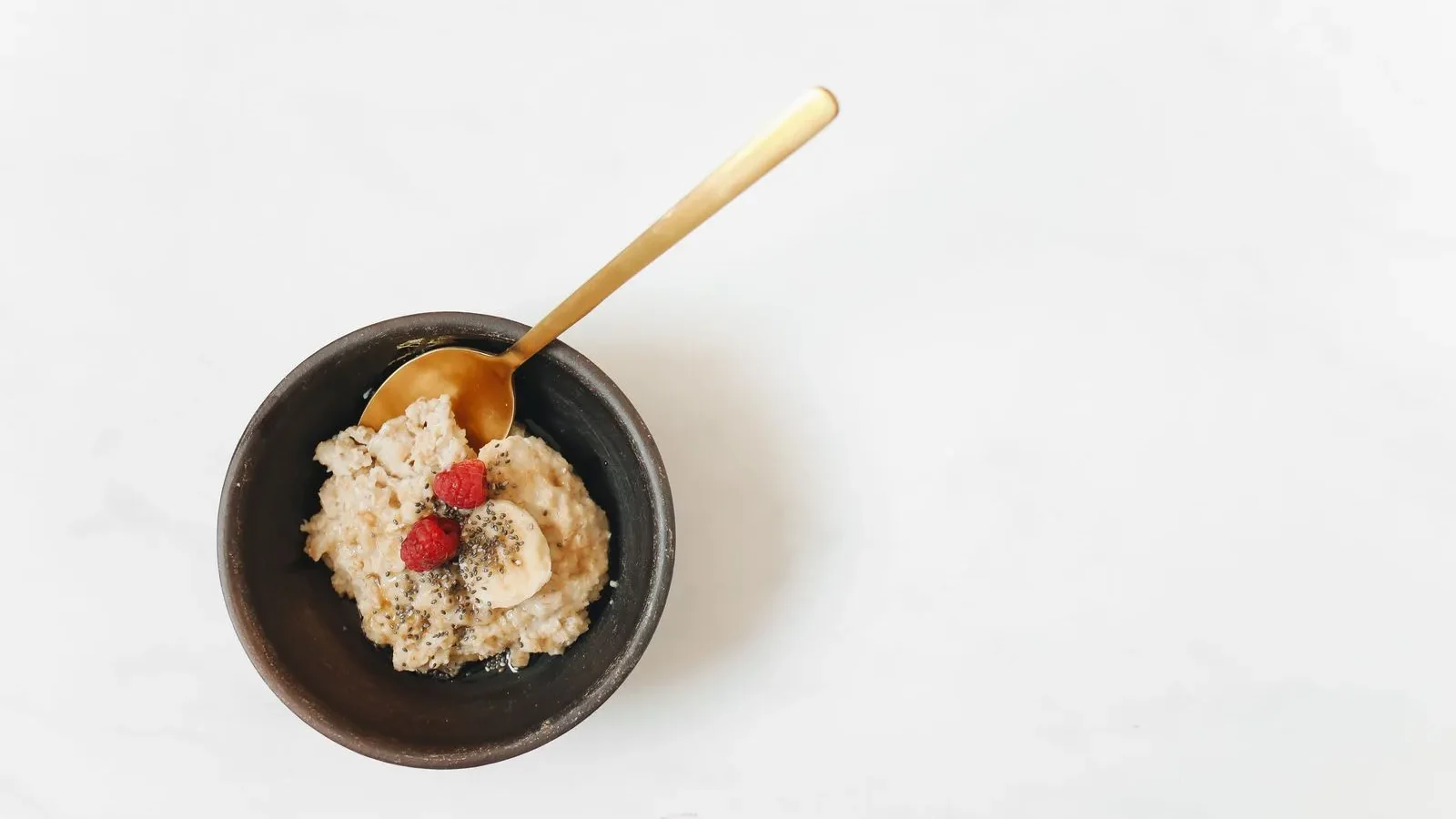
| Protein oats | 1/2 cup dry oats cooked in 1 cup 2% milk, 1/2 cup blueberries, 2 tbsp hemp seeds | About 425 | About 20 g | About 6.5 g |
| Cottage cheese plate | 1/2 cup 1% cottage cheese, 1 slice whole-wheat toast, 1 cup raspberries | About 225 | About 19.5 g | About 10 g |
| Tofu and bean scramble | 1/2 cup firm tofu, 1/2 cup black beans, peppers and salsa | About 295 | About 29 g | About 10 g |
What this looks like in practice
Compare those with a common quick breakfast: two slices of whole-wheat toast and a medium banana. By USDA numbers, that’s about 266 calories but only about 9 g of protein. Swapping one slice of toast for a 170 g container of plain nonfat Greek yogurt raises the protein to about 22.5 g for only about 20 more calories.
To push any of the sample breakfasts closer to 30 g of protein, add an extra egg (about 6 g), a cup of milk (about 8 g) or a cup of unsweetened soy milk (about 7 g).
One thing to watch: USDA lists half a cup of 1% cottage cheese at about 460 mg of sodium, about a fifth of the FDA’s 2,300 mg Daily Value. If you’re limiting salt, look for lower-sodium versions.
Making breakfast easy on busy mornings
A healthy breakfast only helps if you actually make it. These habits cut the morning work to a minute or two:
- Batch-cook eggs. Hard-boil six to a dozen at the start of the week and keep them in the fridge.
- Prep oats the night before. Combine oats, milk or soy milk and seeds in a jar, refrigerate and add fruit in the morning.
- Portion yogurt bowls ahead. Spoon yogurt into containers and keep berries and nuts in separate small containers so nothing gets soggy.
- Pick a default breakfast. Having one go-to meal on weekdays removes the decision when you’re rushed.
- Keep a backup. A container of cottage cheese or Greek yogurt and a piece of fruit works when everything else falls apart.
If breakfast is part of a calorie-controlled plan, fit it into your daily target rather than treating it as extra. Our guide to how a calorie deficit works explains how to set that target.
Common breakfast mistakes
- Eating breakfast only because you “should.” In the 2019 meta-analysis, people assigned to eat breakfast ate more calories over the day on average. If you’re not hungry, waiting is fine.
- A breakfast that’s low in protein. In the example above, toast and a banana provide only about 9 g of protein. Add an egg, yogurt, cottage cheese, tofu or milk.
- Ignoring added sugar. Flavored yogurts and sweetened cereals often contain added sugars. Compare the label with the 50 g Daily Value and start with plain versions.
- Forgetting drinks. Sweetened coffee drinks and juice add calories with little protein or fiber. Check the label or nutrition information.
- Skipping, then grazing. If skipping breakfast turns into pastries and vending-machine snacks mid-morning, a planned breakfast is the better choice for you.