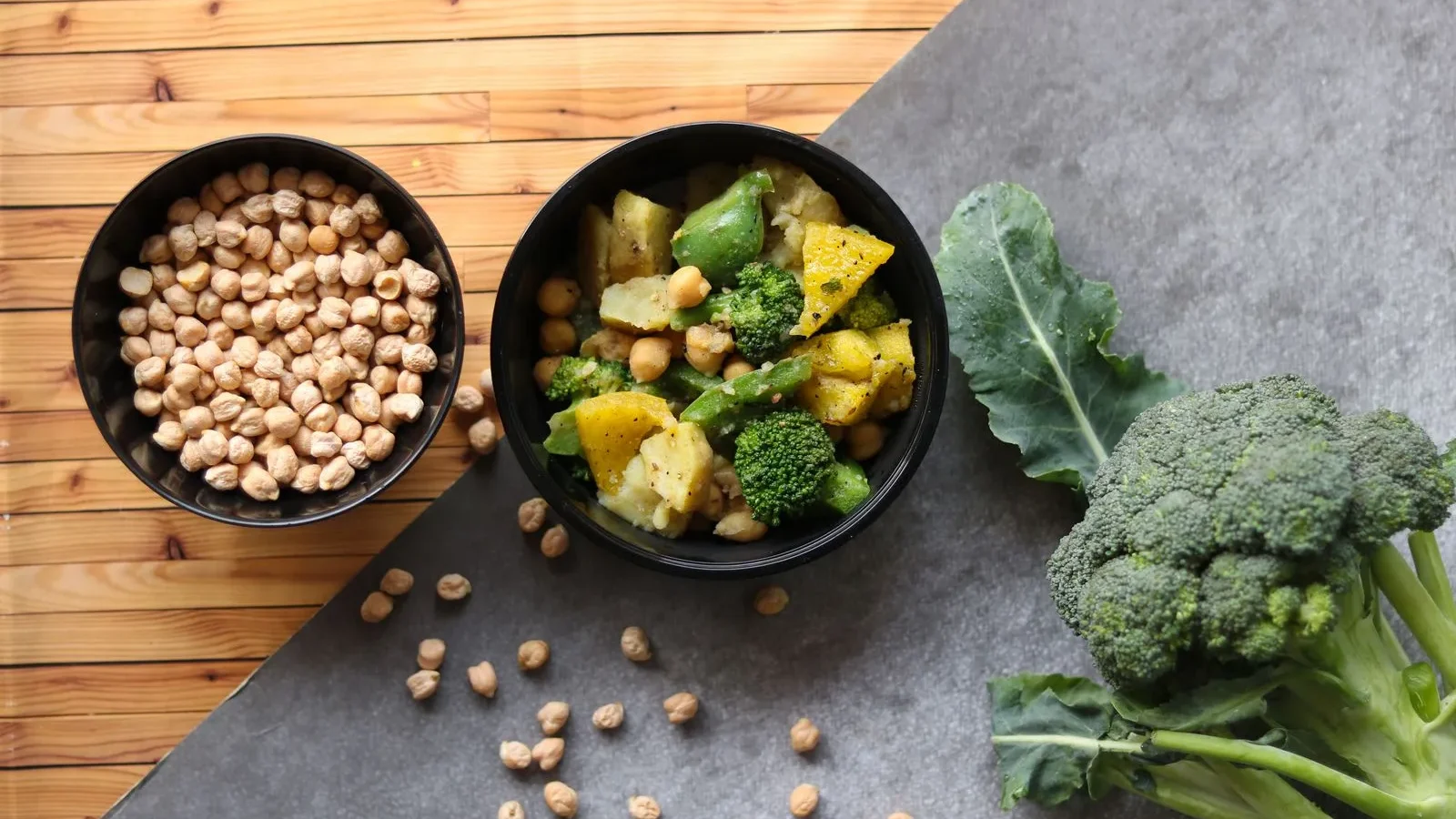
The foods most likely to leave you bloated are beans and lentils, cruciferous vegetables such as broccoli and cabbage, some fruits and juices, dairy (if lactose doesn’t agree with you), wheat, onions and garlic, and sugar-free products sweetened with sugar alcohols. Fizzy drinks and eating fast add swallowed air on top.
Most of these foods are nutritious, so the goal isn’t to cut them all. It’s to find your own triggers, adjust portions and habits, and know when bloating deserves a doctor’s attention.
This guide covers why each food causes gas, what the research shows, where a low-FODMAP diet fits, and the warning signs to take seriously.
Why some foods make you bloated
Gas in your digestive tract comes from two main sources, according to the National Institute of Diabetes and Digestive and Kidney Diseases (NIDDK).
- Swallowed air. Everyone swallows some air when eating and drinking. You swallow more when you eat or drink too fast, chew gum, suck on hard candy, drink fizzy drinks, smoke or wear loose-fitting dentures.
- Fermentation. Some sugars, starches and fiber aren’t fully digested in your stomach and small intestine. Bacteria in your large intestine break them down and make gas in the process.
Many of the carbohydrates that ferment this way are grouped under the name FODMAPs (fermentable oligosaccharides, disaccharides, monosaccharides and polyols). NIDDK describes them simply as carbohydrates that are hard to digest. People differ a lot in how much gas these foods produce and how much it bothers them.
The top foods and habits that cause bloating
This list combines NIDDK’s examples of gas-producing foods with its list of high-FODMAP foods for people with irritable bowel syndrome (IBS).
| Food or habit | Examples | Why it can bloat you |
|---|---|---|
| Beans, lentils and peas | Pinto, black and baked beans, lentils, peas | Carbohydrates that reach the large intestine undigested and ferment |
| Cruciferous vegetables | Broccoli, cauliflower, cabbage, kale, collard greens | Fermentable carbohydrates |
| Some fruits and juices | Apples, pears, peaches, mango, watermelon, fruit juice | Fructose and other FODMAPs |
| Dairy with lactose | Milk, ice cream, yogurt, soft cheeses | Lactose, if you don’t digest it well |
| Wheat and rye | Bread, pasta, crackers | Fermentable carbohydrates |
| Onions and garlic | Including garlic salt | High in FODMAPs |
| Sugar alcohols | Sorbitol, mannitol, xylitol, erythritol, maltitol in sugar-free gum, candy and other products | Poorly absorbed, especially in larger amounts |
| Sweetened drinks | Soft drinks, sports and energy drinks with high-fructose corn syrup | Fructose |
| Fizzy drinks | Soda, sparkling water, other carbonated drinks | More swallowed air |
| Eating fast, gum, straws | Meals on the run, talking while eating | Swallowed air |
NIDDK adds two individual triggers: some people get more gas when they eat a lot of fiber, and others feel more bloated after high-fat foods.
What the research says about the biggest culprits
Beans: less trouble than their reputation
Beans are the classic gas food, but the effect is often smaller than people expect. In three feeding studies, adults ate half a cup of beans daily for 8 or 12 weeks. In the first week, fewer than half reported more flatulence from pinto or baked beans, and only 19% did with black-eyed peas. Between 3% and 11% reported more gas even on control diets with no beans.
The authors concluded that concerns about beans may be exaggerated, but that responses vary by person and bean type. Starting with small portions is a reasonable way to find your level.
Cruciferous vegetables
Broccoli, cauliflower, kale and collards are on NIDDK’s list of vegetables that can lead to gas, and cabbage is on its list of high-FODMAP foods. They are also nutritious, fiber-rich vegetables, so try smaller portions spread across the day before cutting them out.
Lactose and dairy
If you have trouble digesting lactose, the natural sugar in milk, you may not need to avoid dairy completely. A systematic review of 36 randomized trials found moderate-quality evidence that most adults with lactose intolerance or malabsorption tolerate 12 to 15 g of lactose, about one cup of milk. Most of the studies tested people with malabsorption rather than confirmed intolerance, which limits the conclusion.
Sugar alcohols
Sweeteners ending in “-ol” show up in sugar-free gum, candy and other products. A systematic review of 79 studies found that these polyols cause dose-dependent gas, abdominal discomfort and laxative effects in both healthy people and people with IBS, and that malabsorption increases when several are eaten together. Check ingredient lists if sugar-free snacks seem to set you off.
Fizzy drinks and fast eating
Carbonated drinks and rushed meals both add air to your gut. NIDDK suggests limiting fizzy drinks, gum, hard candy and drinking through a straw, and eating slowly while sitting down rather than on the run.
Where the low-FODMAP diet fits
The low-FODMAP diet is a treatment approach for IBS, not a general debloating plan. It is meant to be done in stages, with guidance from a doctor and often a dietitian.
NIDDK describes how it works in practice. Your doctor may suggest trying the diet for a few weeks. If your symptoms improve, FODMAP foods are slowly added back, and you may be able to eat some of them without symptoms. Your doctor may also suggest working with a dietitian.
That reintroduction step matters. Many high-FODMAP foods, such as beans, fruit and whole grains, are valuable sources of fiber, so staying on the strict phase indefinitely without guidance isn’t the goal. If you suspect IBS, get a diagnosis first rather than self-treating.
Practical ways to ease bloating
- Slow down at meals. Sit down, chew with your mouth closed and avoid talking while you eat, so you swallow less air.
- Go smaller and more often. Both NIDDK and the NHS suggest smaller, more frequent meals instead of large ones. The NHS also advises against large meals late at night.
- Cut back on fizz, gum and straws. Swap some soda or sparkling water for still water or unsweetened tea.
- Add fiber gradually. NIDDK’s IBS guidance suggests increasing fiber slowly, by 2 to 3 g a day, to help prevent gas and bloating.
- Drink enough water and stay active. The NHS lists drinking plenty of water and regular exercise among ways to ease bloating. A daily walk is an easy start; see our guide to walking for weight loss.
- Keep a food and symptom diary. NIDDK notes that your doctor may ask you to track what you eat and drink alongside your symptoms to spot triggers.
You can also estimate your daily target with our water intake calculator.
What a lower-bloat day can look like
Here’s how those changes look in practice, keeping the nutritious foods while trimming the extras that add gas.
| Instead of | Try | Why |
|---|---|---|
| A big bowl of beans after weeks without them | A few spoonfuls in a salad or soup, increased gradually | Lets you find your tolerance |
| Two glasses of milk at once if lactose bothers you | About a cup at a time | Most people with lactose malabsorption tolerate about 12–15 g |
| Sugar-free gum and candy all afternoon | Fewer pieces, or none | Less sugar alcohol and less swallowed air |
| Soda with lunch | Still water or unsweetened iced tea | No carbonation |
| A five-minute desk lunch | A seated meal, eaten slowly | Slower eating, less air |
| A large late dinner | A moderate dinner earlier, plus a short walk | Follows NHS tips on meal size, timing and activity |
Change one or two things at a time for a week or two and note what happens. If you change everything at once, you won’t know which change helped.
Common mistakes
- Cutting out whole food groups. Dropping beans, vegetables, fruit and dairy all at once can cost you fiber and nutrients you need.
- Starting a strict low-FODMAP diet on your own. It’s built for IBS, works best with a doctor or dietitian, and includes a reintroduction phase.
- Jumping from low fiber to high fiber overnight. Increase gradually instead.
- Swapping sugar for sugar alcohols. A “sugar-free” snack can cause more gas than the original.
- Mistaking bloating for belly fat. Bloating usually comes and goes, often after meals; fat doesn’t. Bloating that doesn’t go away needs a doctor’s check. If your goal is a smaller waist, see how to lose belly fat.
- Ignoring bloating that won’t go away. See the warning signs below.
When bloating needs a doctor
Occasional bloating after a big or gassy meal is normal. NIDDK suggests talking with your doctor if gas symptoms bother you, change suddenly, or come with abdominal pain, constipation, diarrhea or weight loss.
The NHS advises seeing a doctor if you feel bloated regularly, if you’ve changed your diet and still feel bloated, or if bloating comes with unintentional weight loss or blood in your stool. It notes that bloating that doesn’t go away can sometimes be a sign of something more serious, such as ovarian cancer.