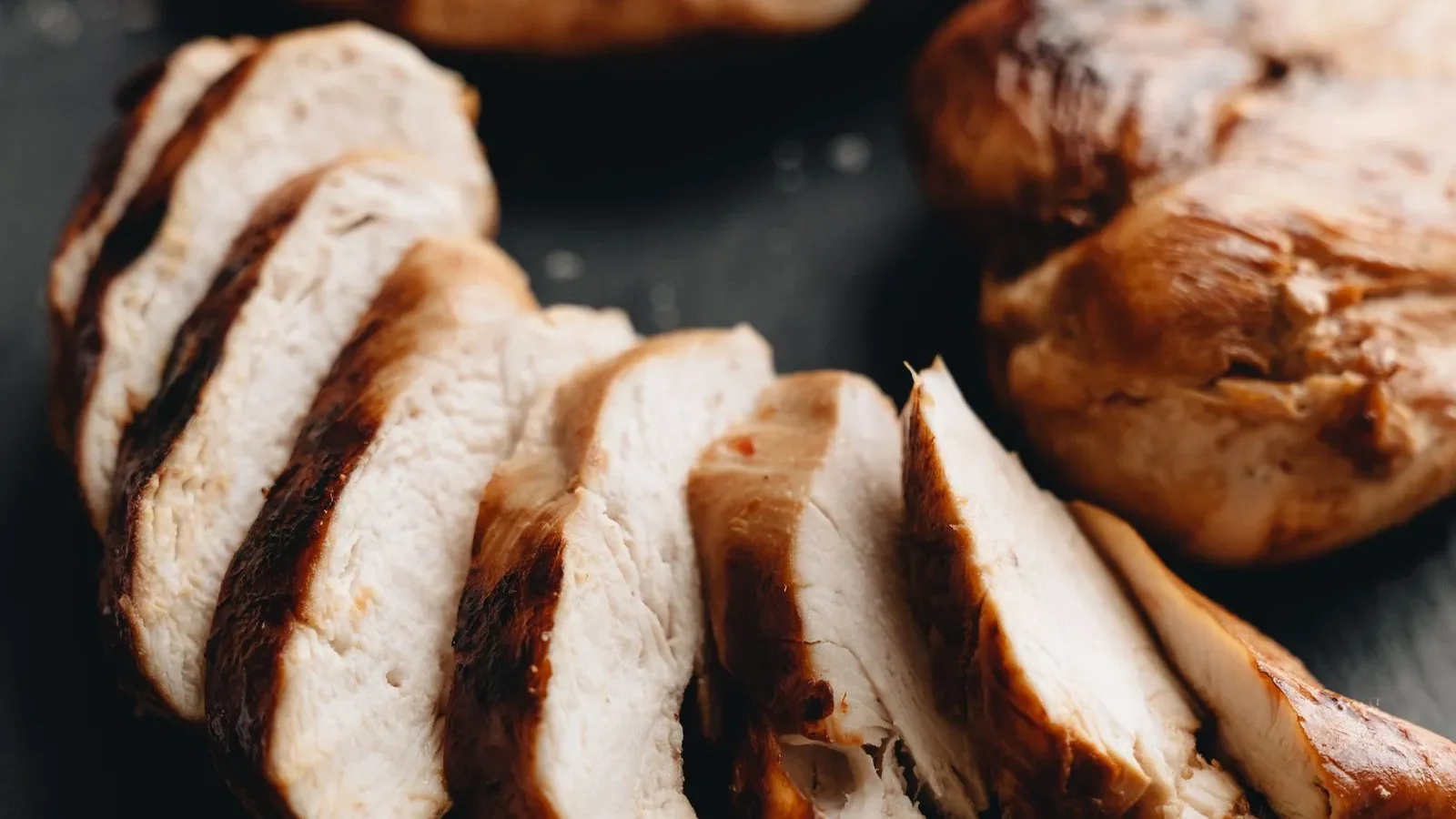
The calories in chicken depend on four things: the cut, whether you eat the skin, how it’s cooked, and whether the weight you log is raw or cooked. According to USDA data, roasted skinless breast has about 165 calories and 31 g of protein per 100 g, roasted thigh with skin about 232 calories, and batter-fried breast with skin about 260 calories.
This overview uses USDA FoodData Central numbers to show how much each factor shifts the count, how to log chicken accurately, and how to keep it lean without making dinner boring.
Chicken is one of the easiest high-protein foods to fit into a weight-loss plan. Knowing where the extra calories hide just makes it easier to count.
Calories in chicken by cut
All values below are for roasted chicken from USDA FoodData Central, rounded. The 3 oz (85 g) columns are calculated from the per-100 g values.
| Cut (roasted) | Calories per 100 g | Protein per 100 g | Calories per 3 oz | Protein per 3 oz |
|---|---|---|---|---|
| Breast, meat only | 165 | 31 g | 140 | 26 g |
| Breast, with skin | 197 | 30 g | 167 | 25 g |
| Drumstick, meat only | 155 | 24 g | 132 | 21 g |
| Drumstick, with skin | 191 | 23 g | 162 | 20 g |
| Thigh, meat only | 179 | 25 g | 152 | 21 g |
| Thigh, with skin | 232 | 23 g | 197 | 20 g |
| Wing, meat only | 203 | 30.5 g | 173 | 26 g |
| Wing, with skin | 254 | 24 g | 216 | 20 g |
Skinless breast gives you the most protein for its calories: about 19 g of protein per 100 calories, compared with about 14 g for skinless thigh and about 9 g for wings with the skin on.
Dark meat isn’t the problem it’s often made out to be. In these USDA entries, skinless drumstick and thigh land within about 15 calories per 100 g of skinless breast, with a bit less protein. If you prefer thighs, they can fit a weight-loss plan just fine.
The skin: the biggest single swing
USDA lists roasted chicken skin on its own at about 454 calories and 41 g of fat per 100 g. That is why leaving the skin on adds roughly 30–55 calories per 100 g of chicken, depending on the cut.
Here’s what that looks like on a plate. USDA lists half a roasted breast with skin (about 98 g, bone removed) at about 193 calories and 29 g of protein. Half a breast with the skin also removed (about 86 g) comes to about 142 calories and 27 g of protein. Dropping the skin saves about 50 calories but only about 2.5 g of protein.
You don’t have to give up crispy skin forever. Just treat it like any other higher-calorie extra: enjoy it sometimes and count it when you do.
How cooking method changes the count
The method itself matters less than what it adds. Breading, batter and frying oil make the biggest difference.
| Chicken breast, prepared as | Calories per 100 g | Protein per 100 g | Fat per 100 g |
|---|---|---|---|
| Rotisserie (original seasoning), meat only | 137 | 28 g | 3 g |
| Grilled, skinless and boneless | 151 | 30.5 g | 3 g |
| Stewed, meat only | 151 | 29 g | 3 g |
| Roasted, meat only | 165 | 31 g | 3.5 g |
| Fried, meat only | 187 | 33 g | 4.5 g |
| Fried with skin, flour coating | 222 | 32 g | 9 g |
| Fried with skin, batter coating | 260 | 25 g | 13 g |
Batter-fried breast with skin has about 95 more calories per 100 g than roasted skinless breast, less protein, and about 9 g of carbohydrate from the coating. These figures come from separate USDA analyses of different samples, so treat small gaps, such as grilled versus roasted, as approximate. The large gaps from skin and coatings are the ones that matter.
Don’t forget what goes in the pan
Oil, butter, marinades and sauces count too. USDA lists a tablespoon of olive oil at about 119 calories, close to the 128 calories in 3 oz of grilled breast. Measure oil with a spoon rather than pouring from the bottle.
A note on sodium
Calories aren’t the only number that changes. USDA lists rotisserie breast meat at about 313 mg of sodium per 100 g, versus about 74 mg for plain roasted breast. Some raw chicken is also sold “with added solution”; USDA lists that kind of raw breast at about 173 mg of sodium per 100 g, compared with about 45 mg for plain raw breast. The FDA’s Daily Value for sodium is 2,300 mg, so check the package label if you’re watching salt.
Raw versus cooked weight: the most common logging mistake
Chicken loses water as it cooks, so the same piece weighs less afterward and each gram carries more calories and protein. USDA lists raw skinless breast at about 74 g of water per 100 g, compared with about 66 g after grilling.
Here is how that plays out with USDA numbers for boneless, skinless breast:
- 113 g (4 oz) raw: about 136 calories and 25 g of protein.
- 113 g (4 oz) grilled: about 171 calories and 34.5 g of protein.
If you weigh 113 g of cooked chicken but log it under a raw entry, you undercount by about 35 calories and 9 g of protein for that one portion. The fix is simple: match the entry to what you weighed. Weigh raw and use a raw entry, or weigh cooked and use a cooked entry for the same cooking method.
For batch cooking, weigh the whole tray of cooked chicken, divide it into portions and note the weight of each. That way every container has a known cooked weight.
Consistent tracking is worth the effort. A 2011 systematic review of 22 studies found a consistent link between self-monitoring (food diaries, activity logs or regular weigh-ins) and weight loss, although the authors rated the evidence as weak because of limitations in how the studies were designed.
Where chicken fits in a weight-loss plan
Protein helps you stay full and hold on to muscle while you eat less. A 2015 review in the American Journal of Clinical Nutrition suggested about 1.2–1.6 g of protein per kg of body weight a day, with roughly 25–30 g per meal, although longer-term results were mixed because people found the diets hard to stick to.
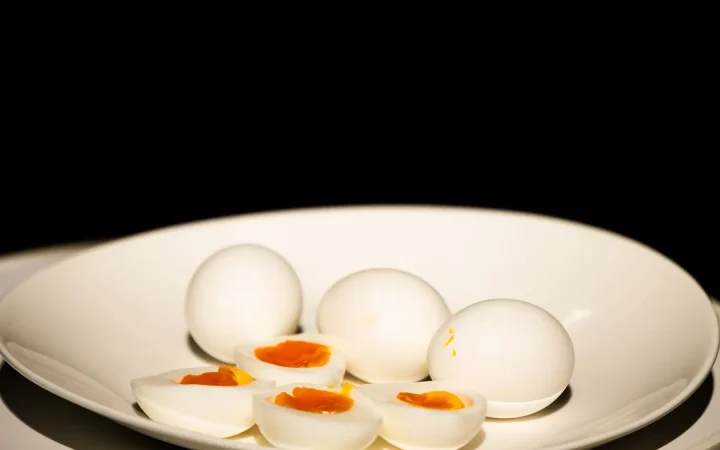
A 3 oz serving of roasted skinless breast, with about 26 g of protein, covers that per-meal amount on its own. For comparison, a large hard-boiled egg has about 6 g, as our guide to protein in an egg explains. For your personal daily number, see how much protein you need to lose weight.
Chicken only helps if the rest of your day fits your calorie budget. Our calorie calculator gives you a starting target, and how a calorie deficit works explains why a moderate gap beats a drastic one.
Cook it safely
Lean cooking methods only work if the chicken is safe to eat. The CDC’s advice for handling raw chicken is short:
- Wash your hands with soap and water for at least 20 seconds before and after handling raw chicken.
- Don’t wash raw chicken; it’s ready to cook as it is.
- Use a separate cutting board for raw chicken.
- Use a food thermometer to make sure chicken reaches a safe internal temperature of 165°F.
- Refrigerate or freeze leftovers within 2 hours, or within 1 hour if the food has been somewhere hotter than 90°F, such as a hot car.
A thermometer also helps you avoid overcooking lean breast meat, which can leave it dry.
Common mistakes when counting chicken calories
- Mixing up raw and cooked entries. In the USDA example above, that’s about 35 calories missed on a single 4 oz portion.
- Logging the chicken but not the oil or sauce. A tablespoon of oil is about 119 calories.
- Assuming all chicken is lean. Batter-fried breast with skin has about 95 more calories per 100 g than roasted skinless breast.
- Writing off dark meat. Skinless thighs and drumsticks are close to breast in calories; it’s the skin that makes the bigger difference.
- Ignoring sodium. Rotisserie and “added solution” chicken can carry several times more sodium than plain chicken.