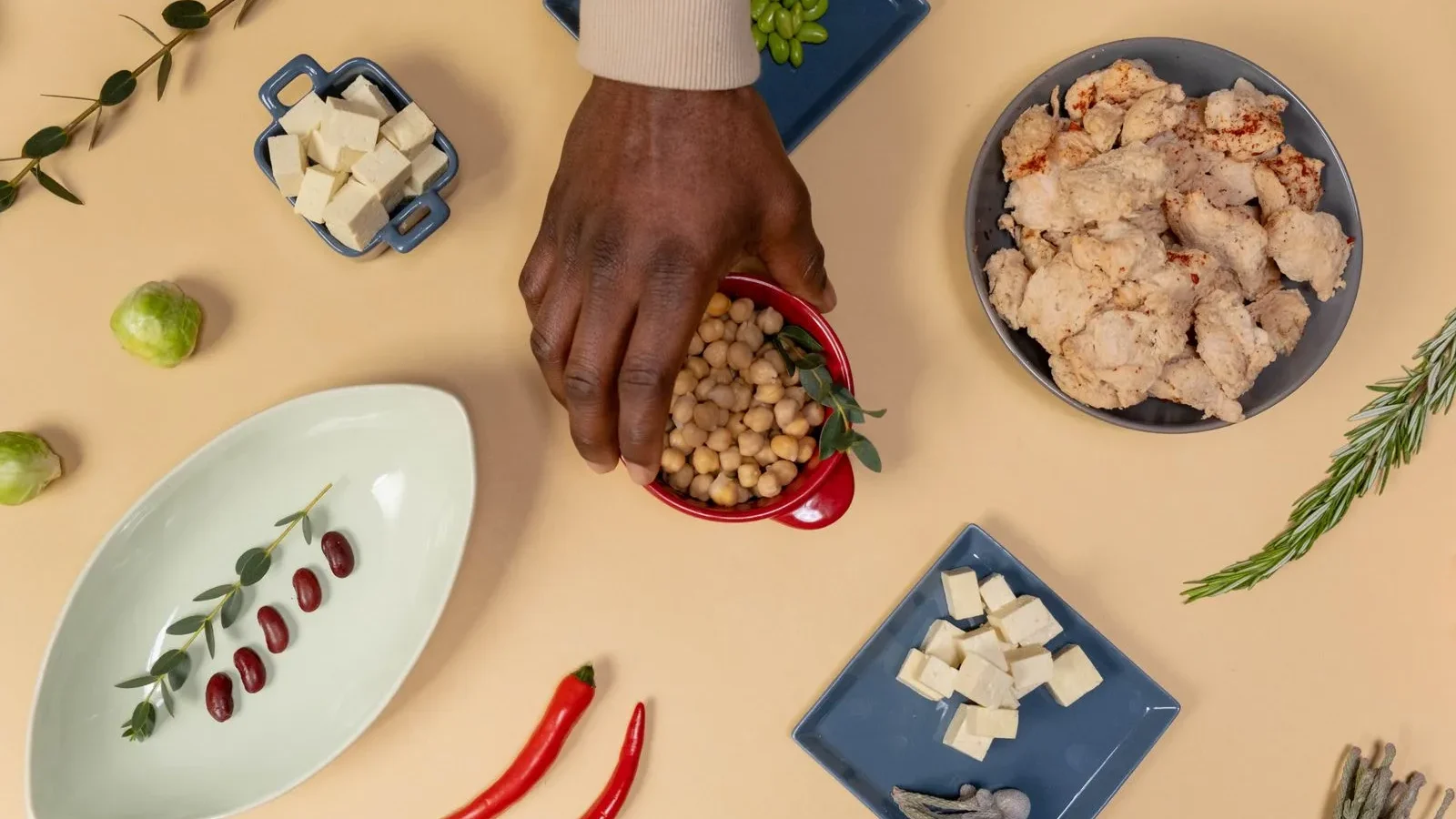
The best vegan protein sources are soy foods (tofu, tempeh and edamame), beans and lentils, with seitan, seeds, nuts, peas and whole grains filling the gaps. According to USDA data, half a cup of firm tofu has about 22 g of protein and a cup of cooked lentils about 18 g.
This guide gives you a table of plant proteins with grams per serving, what the research says about plant protein quality and “combining” proteins, a sample day that reaches about 90 g of protein, and a note on vitamin B12, a nutrient every vegan needs a reliable source of.
If you eat plant-based partly to manage your weight, the same principles apply as for any diet: enough protein, plenty of fiber and a modest calorie deficit.
The best vegan protein sources, by serving
The table uses USDA FoodData Central values for plain, unsalted versions of each food. Where USDA doesn’t list a household measure, the serving was calculated from its per-100 g values. Numbers are rounded, and branded products differ, so check the label on what you buy.
| Food | Serving | Protein | Calories | Protein per 100 calories |
|---|---|---|---|---|
| Firm tofu (calcium-set) | 1/2 cup (126 g) | 22 g | 181 | 12 g |
| Edamame, frozen, prepared | 1 cup (155 g) | 18 g | 188 | 10 g |
| Lentils, boiled | 1 cup (198 g) | 18 g | 230 | 8 g |
| Tempeh | 3 oz (85 g) | 17 g | 163 | 11 g |
| Kidney beans, boiled | 1 cup (177 g) | 15 g | 225 | 7 g |
| Black beans, boiled | 1 cup (172 g) | 15 g | 227 | 7 g |
| Chickpeas, boiled | 1 cup (164 g) | 14.5 g | 269 | 5 g |
| Hemp seeds, hulled | 3 tbsp (30 g) | 9.5 g | 166 | 6 g |
| Pumpkin seed kernels | 1 oz (28 g) | 8.6 g | 158 | 5 g |
| Quinoa, cooked | 1 cup (185 g) | 8 g | 222 | 4 g |
| Soy milk, unsweetened, fortified | 1 cup (243 g) | 7 g | 80 | 9 g |
| Peanut butter, smooth | 2 tbsp (32 g) | 7 g | 191 | 4 g |
| Almonds | 1 oz (about 23 nuts) | 6 g | 164 | 4 g |
| Rolled oats, dry | 1/2 cup (40 g) | 5 g | 152 | 3.5 g |
| Green peas, frozen, boiled | 1/2 cup (80 g) | 4 g | 62 | 7 g |
How to read the table
If you’re eating in a calorie deficit, the last column matters most. Soy foods and legumes give you the most protein for their calories, while nuts and seeds bring a lot of fat along with their protein. They’re great add-ons, but a small handful goes a long way.
Labels matter more than you might expect. USDA lists firm calcium-set tofu at about 17 g of protein per 100 g but an extra-firm nigari tofu at about 10 g per 100 g, so two blocks that look alike can differ a lot.
What about seitan?
Seitan is made from vital wheat gluten, which USDA lists at about 75 g of protein per 100 g of the dry powder. Finished seitan is mixed with water and other ingredients, so it has far less protein per gram than the powder. Go by the package label, and skip it if you have celiac disease or otherwise need to avoid gluten.
How much protein do you need on a vegan diet?
The Recommended Dietary Allowance (RDA) for adults is 0.8 g of protein per kg of body weight a day, as a 2019 review of protein in vegetarian diets points out. That is a baseline for healthy adults, not a weight-loss target.
When you’re trying to lose fat, more can help. A 2015 review in the American Journal of Clinical Nutrition concluded that diets with about 1.2–1.6 g per kg a day, and roughly 25–30 g per meal, may improve appetite and weight management. Longer-term results were mixed, largely because people found it hard to stick to the diets.
For a 70 kg (154 lb) adult, that range works out to about 84–112 g a day. Our guide to how much protein you need to lose weight explains the math, or you can plug your numbers into the protein calculator.
Plant protein quality and the “combining” question
Two worries come up again and again: that plant protein is poorly digested, and that you have to pair foods like rice and beans at every meal. The research is more reassuring than the folklore.
Digestibility
In their 2019 review in Nutrients, Mariotti and Gardner noted that the more precise human studies show only small differences in digestibility between plant and animal proteins. Soy protein isolate, pea protein, wheat flour and lupin flour were about 89–92% digestible, similar to eggs (91%) and meat (90–94%) and a little below milk protein (95%).
Amino acids and food combining
Individual plant proteins can run low in one essential amino acid; lysine in wheat is the classic example. The same review found no evidence that you need to combine proteins within one meal. A reasonable variety of protein foods over the course of the day appears to be enough.
The authors concluded that protein-rich foods such as legumes, nuts and seeds are enough to cover protein needs for adults on vegan diets. Shortfalls are more likely when almost all of your protein comes from cereals, or when you simply eat too little food overall.
Protein powder is optional. If you struggle to hit your target with food alone, a soy or pea protein powder is a convenient top-up. Check the label for protein per scoop and added sugar, and keep in mind that formulas change.
Can a vegan diet help with weight loss?
It can. In a 16-week randomized trial, 244 adults with overweight or obesity were assigned either to a low-fat vegan diet or to make no diet changes. The vegan group lost an average of 5.9 kg, while body weight didn’t change significantly in the control group. The researchers attributed the loss to lower calorie intake plus a rise in the calories burned after meals.
Keep the limits in mind. Most participants (87%) were women, the comparison group made no changes at all, and several researchers were affiliated with the Physicians Committee for Responsible Medicine, a nonprofit nutrition organization.
A vegan diet doesn’t switch off the basic rule of weight loss: you still need to eat a little less energy than you use. Fries, cookies and sweetened drinks can all be vegan. See how a calorie deficit works for the details.
A sample day with about 90 g of plant protein
Here is what a protein-focused vegan day can look like, using the USDA figures above.
| Meal | What to eat | Protein | Calories |
|---|---|---|---|
| Breakfast | 1/2 cup oats cooked in 1 cup unsweetened soy milk, topped with 3 tbsp hemp seeds | 22 g | 398 |
| Lunch | 1 cup lentils and 1 cup quinoa with roasted vegetables | 26 g | 452 |
| Snack | 1 cup edamame | 18 g | 188 |
| Dinner | 1/2 cup firm tofu stir-fried with 1/2 cup peas and other vegetables | 26 g | 243 |
| Total | Listed protein foods only | 92 g | About 1,280 |
The totals cover only the listed protein foods. Vegetables, cooking oil, sauces and extra snacks add calories, so scale portions up or down to fit your own target. If you want to set your carb and fat split too, try the macro calculator.
Those foods also supply about 40 g of fiber. If you’re new to eating this many beans and lentils, building up portions over a few weeks can make the change more comfortable.
Don’t forget vitamin B12
For most vegans, protein isn’t the hardest nutrient to cover. Vitamin B12 is. According to MedlinePlus, B12 is found naturally in animal foods and is not present in plant foods unless they are fortified, and people who follow vegetarian or vegan diets are at higher risk of deficiency.
MedlinePlus lists the recommended intake as 2.4 mcg a day for anyone 14 and older, 2.6 mcg during pregnancy and 2.8 mcg while breastfeeding. Fortified breakfast cereals are one source; check the Nutrition Facts label to see whether a product contains added B12, and talk to your doctor about whether you need a supplement.
For a deeper dive, see the NIH Office of Dietary Supplements’ vitamin B12 fact sheet.
Common mistakes on a plant-based diet
- Leaning on grains alone. Bread, pasta and rice do contain protein, but a day built mostly on cereals is where shortfalls are most likely. Add a legume or soy food to most meals.
- Treating nuts and nut butters as your main protein. Two tablespoons of peanut butter have about 7 g of protein but about 190 calories. Use them as toppings, not the centerpiece.
- Assuming every product is the same. Tofu, plant milks and meat alternatives vary widely. Unsweetened soy milk has about 7 g of protein per cup; check the label on other plant milks before counting on them.
- Skipping B12. MedlinePlus notes that plant foods don’t contain it unless they are fortified.
- Eating too little overall. A big drop in calories can drag protein down with it. If you’re losing weight faster than planned or feel run down, review your portions and lean on the higher-protein foods in the table.