The kitchen tricks that help most with weight loss don’t depend on willpower. They change what is closest, what is already prepared and what happens by default, so the choice you’d like to make is also the easy one.
This guide covers what the research says about food placement and plate size (one holds up much better than the other), plus four practical habits: measuring oil, batch cooking, setting healthy defaults and putting leftovers away right after you serve.
None of these replaces a calorie deficit. They simply make one easier to keep. Our guide to how a calorie deficit works covers the basics.
Put the food you want to eat within reach
The best-supported kitchen trick is also the simplest. Food that is close and easy to grab tends to get eaten, and food that takes a few extra steps gets eaten less often.
The studies measured snacking in one sitting, not weight over months. Treat placement as a helpful nudge, not a weight-loss plan on its own. Here’s how to apply it at home:
- Give the counter to fruit. A bowl of washed apples, oranges or bananas takes the spot where cookies or chips might otherwise sit.
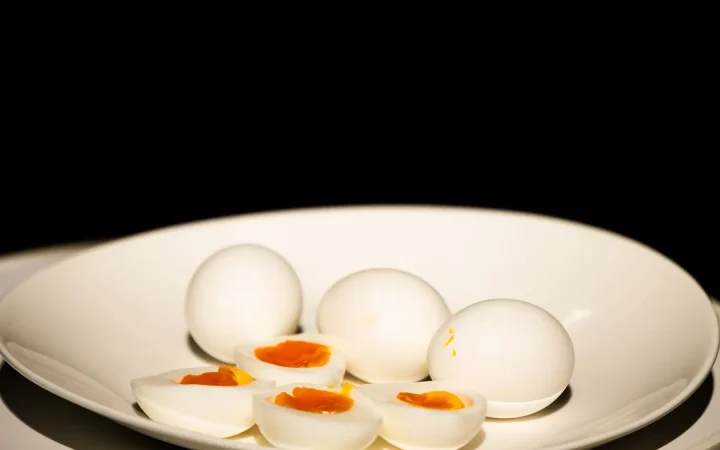
- Make the fridge’s front row the healthy row. Cut vegetables, plain yogurt and hard-boiled eggs go at eye level, ready to eat.
- Move treats a few steps away. Keep chips, sweets and baked goods in a high cupboard or the back of the pantry, out of your line of sight.
- Clear the table and desk. A snack bowl where you sit is the “near” condition from the studies, all day long.
- Keep water handy. A filled pitcher in the fridge or a glass by the sink makes it the first drink you reach for.
If cravings are your main challenge rather than setup, our tips on avoiding junk food cravings go deeper.
Smaller plates: the evidence is mixed
Switching to smaller plates is one of the most repeated kitchen tips, and the NIDDK suggests using smaller dishes, bowls and glasses. The research behind it is shakier than the advice suggests.
A 2014 meta-analysis pooled nine experiments that changed dishware size at a self-served meal. Most individual experiments found no significant difference. Combined, there was a small, borderline effect toward eating more from bigger dishware, but results varied widely, and the authors concluded that recommending smaller plates may be premature.
A later preregistered study gave 134 adults either a large or a small plate to serve themselves lunch. The large-plate group ate about 19 calories (3%) more, which the researchers described as no clear evidence of a difference. People with larger plates did leave more food behind.
So use a smaller plate if you like it, but don’t count on it. What goes on the plate matters more. Filling half of it with vegetables sets up a meal well whatever its size, and our guide to controlling portion sizes explains the plate method and hand portions.
Measure the oil, butter and other pours
Cooking fats are where small habits add up fastest. Olive oil is a nutritious fat, but at about 119 calories per tablespoon, a heavy free pour can add a lot of calories to a dish without making it look any bigger.
For example, if you usually pour about 3 tablespoons of oil into a stir-fry and switch to 1 measured tablespoon, you’d cut about 240 calories from the whole dish. Shared between two people, that’s about 120 calories each.
| Kitchen staple | Measured amount | Calories (USDA FoodData Central) |
|---|---|---|
| Olive oil | 1 tablespoon (13.5 g) | About 119 |
| Olive oil | 1 teaspoon (4.5 g) | About 40 |
| Butter, salted | 1 tablespoon (14.2 g) | About 102 |
| Peanut butter, smooth | 2 tablespoons (32 g) | About 191 |
| Ranch dressing | 2 tablespoons (30 g) | About 129 |
| Almonds | 1 ounce, about 23 nuts (28 g) | About 164 |
- Keep measuring spoons by the stove, so measuring is as quick as pouring.
- Measure oil into the pan, then spread it with a brush or tilt the pan instead of adding more.
- Use a nonstick pan for eggs and vegetables, which need less fat to keep from sticking.
- Weigh calorie-dense foods for a week or two. A kitchen scale shows quickly how your usual scoop of peanut butter or handful of nuts compares with the label.
A scale is a learning tool, not a requirement. If weighing food makes you anxious or you have a history of disordered eating, skip it and use measuring spoons or the plate method instead.
Batch cook so the easy meal is the planned one
When dinner is already made, takeout and evening grazing lose much of their pull. Batch cooking is meal planning turned into food you can actually eat.
In a French study of 40,554 adults, people who planned meals ahead at least occasionally had better overall diet quality and more food variety. Women who planned had lower odds of overweight and obesity, and men had lower odds of obesity. The survey captured one point in time, so it shows a link, not cause and effect.
What one batch-cooking session can look like
| Component | Example | How it’s used during the week |
|---|---|---|
| Protein | A tray of chicken breasts, a pot of lentils or a dozen hard-boiled eggs | Salads, wraps, grain bowls, quick snacks |
| Whole grain | A pot of brown rice, quinoa or farro | Bowls and side dishes |
| Vegetables | Two sheet pans of roasted vegetables, plus a container of raw cut vegetables | Sides, omelets, wraps, snacks |
| Sauce | A yogurt-herb sauce or a vinaigrette made with measured oil | Changes the flavor of the same base so it doesn’t get boring |
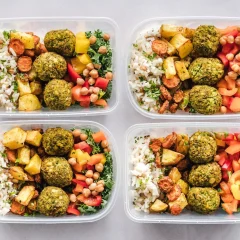
Portion everything into single-meal containers as soon as it cools enough to handle. A protein, a grain and a vegetable in each box makes the next few lunches a grab-and-go decision.
Set healthy defaults
A default is what happens when you don’t decide. In most kitchens it’s whatever is easiest, so make the easiest option the one you want.
- Plate in the kitchen. Leave the pots on the stove, so seconds take a deliberate trip, the same distance idea as the snack-bowl studies.
- Vegetables go on first. Fill half the plate with them before adding anything else.
- Buy the plain version of yogurt, oats and drinks, then add your own fruit or flavor.
- Split big packages right away. The NIDDK suggests dividing large bags or boxes of snacks into single servings as soon as you buy them.
- Keep a short list of go-to meals and their ingredients always stocked, so “nothing to eat” doesn’t mean takeout.
Put leftovers away before you eat
One of the simplest tricks happens right after cooking: pack up the extra food before you sit down. The NIDDK suggests freezing food you won’t serve or eat right away, so you aren’t tempted to finish the whole batch, and freezing leftovers in single- or family-sized servings for ready-made meals later.
It’s also the food-safe habit. The CDC says to refrigerate cooked leftovers within 2 hours, or within 1 hour if the food was exposed to temperatures above 90°F. Dividing hot food into shallow containers helps it chill faster, and small portions can go straight into the fridge while still hot.
The FDA’s storage chart gives most cooked leftovers, including cooked meat and poultry dishes and soups, 3 to 4 days in the refrigerator. Freezing at 0°F keeps food safe indefinitely, and the chart’s freezer times, such as 2 to 3 months for cooked meat dishes, are for quality.
Common kitchen mistakes
- Relying on one trick. Smaller plates or a fruit bowl help a little; several small changes together do more.
- Making healthy food hard to eat. Whole, unwashed vegetables buried in a drawer lose to a bag of chips on the counter.
- Free-pouring oil and dressings. These are the easiest calories to miss.
- Batch cooking one dish for the whole week. Cook plain components and change the sauce, so you don’t get bored and order out.
- Leaving food out to “cool down” for hours. Shallow containers chill food faster in the fridge.
- Clearing out every treat. You don’t need an empty pantry. Moving treats farther away keeps them available while making them less automatic.
Measuring spoons, a kitchen scale and good containers cover most of what you need. Our roundup of weight-loss products covers other tools worth considering.